Case Management Best Practices for Nonprofits
Expert recommendations for effective case management in charities and nonprofit organisations. Practical guidance on documentation, supervision, workload management, and continuous improvement.
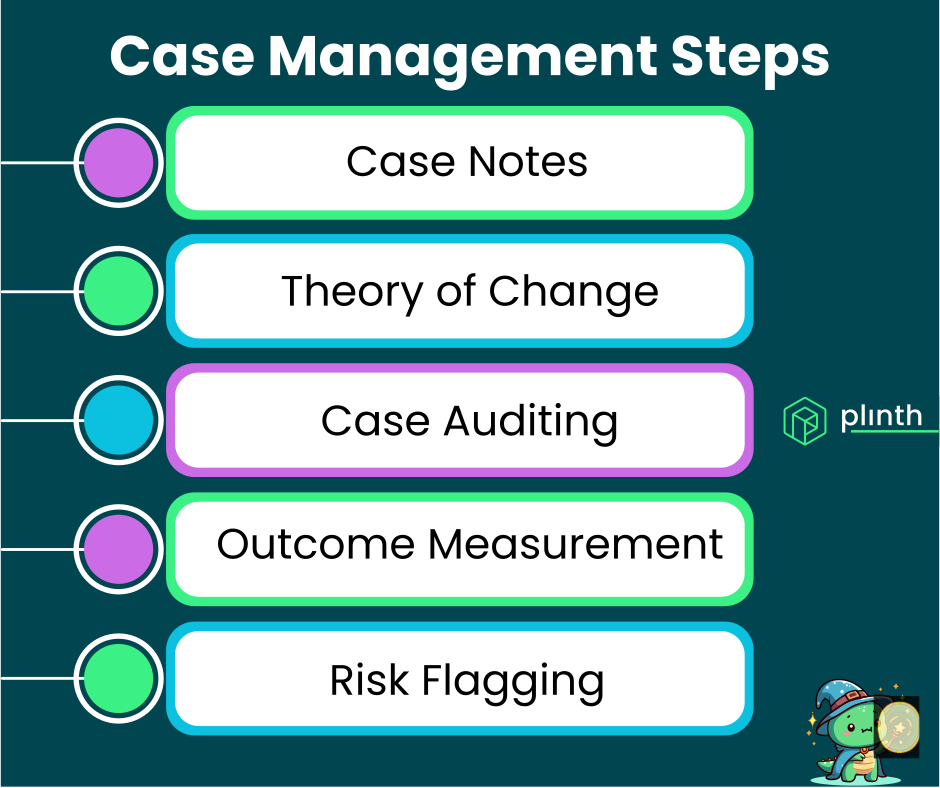
Effective case management requires more than good software – it requires consistent practices, clear standards, and ongoing attention to quality. These best practices help organisations deliver better support while managing limited resources effectively.
What you'll learn: Proven approaches to case management that improve outcomes and efficiency.
Practical guidance: Specific recommendations for documentation, supervision, workload management, and more.
Implementation focus: How to put these practices into action in your organisation.
Who this is for: Case workers, team leads, and programme managers looking to improve case management processes.
Documentation Standards
Consistent, quality documentation is the foundation of effective case management, supporting continuity, accountability, and impact measurement.
Write Notes Promptly
Document interactions as soon as possible after they occur, while details are fresh.
Same-Day Recording: Aim to write notes on the same day as the interaction, ideally immediately after if possible.
Key Information First: If time is limited, capture the essential information first – you can add detail later if needed.
Avoid Backlogs: Documentation backlogs create stress and lead to less accurate records – address promptly if they begin to build.
Mobile Options: If working in the community, use mobile access to record notes rather than waiting until you're back at a desk.
Prompt documentation improves accuracy and reduces the cognitive load of trying to remember details later.
Be Specific and Factual
Notes should provide clear, factual records that anyone could understand.
Specific Details: Include specific information like dates, times, names, and concrete observations rather than vague generalities.
Behaviour vs Interpretation: Describe what you observed or what was said, distinguishing this from your interpretation or assessment.
Avoid Jargon: Use clear language that colleagues from different backgrounds would understand.
Relevant Information: Focus on information relevant to the support being provided, not tangential details.
Specific, factual notes provide a reliable foundation for support decisions and evidence of work done.
Maintain Professional Language
Notes may be read by others including supervisors, colleagues, and potentially the individual themselves.
Respectful Tone: Write about individuals with respect, even when documenting difficult situations or challenging behaviour.
Subject Access: Remember that individuals have the right to request access to records held about them under data protection law.
Appropriate Detail: Include necessary detail for support purposes while respecting privacy and dignity.
Consistent Voice: Use consistent language and style across the organisation to make records easier to navigate.
Professional documentation reflects professional practice and protects both the organisation and the individuals you serve.
Document Decision-Making
Record not just what happened but why decisions were made.
Rationale: When making significant decisions about support, document the reasoning behind them.
Options Considered: Note alternatives that were considered and why they were not chosen.
Risk Assessment: Document how risks were assessed and what factors influenced decisions.
Consent: Record discussions about consent and the individual's wishes.
Documenting decision-making provides accountability and helps others understand why particular approaches were taken.
Supervision and Support
Regular, quality supervision supports case workers to do their best work and ensures consistent service quality.
Regular Supervision Schedule
Establish and maintain consistent supervision arrangements.
Frequency: Most case workers benefit from at least fortnightly supervision, with more frequent contact available when needed.
Protected Time: Supervision should be scheduled in diaries and protected from interruption except for genuine emergencies.
Preparation: Both supervisor and supervisee should prepare for sessions to make the best use of time.
Documentation: Keep records of supervision discussions, decisions, and agreed actions.
Consistent supervision prevents problems from escalating and supports professional development.
Case Review Focus
Supervision should systematically review caseloads, not just respond to current crises.
Caseload Overview: Regularly review the full caseload, not just the cases that are top of mind or causing problems.
High Concern Priority: Start with high concern cases to ensure appropriate attention and action.
Quiet Cases: Specifically discuss cases that haven't had recent contact – are they progressing quietly or has engagement dropped off?
Outcome Tracking: Discuss progress toward goals and whether cases are ready for closure or need different approaches.
Systematic review ensures no cases are overlooked and supports consistent service quality across the caseload.
Supportive Environment
Supervision should balance accountability with support for the case worker's wellbeing.
Psychological Safety: Create an environment where case workers feel able to discuss difficulties, mistakes, and uncertainties without fear.
Emotional Support: Case management work can be emotionally demanding – supervision should acknowledge and support this.
Professional Development: Discuss learning needs and opportunities alongside case review.
Workload Management: Actively monitor workload and intervene if case workers are becoming overwhelmed.
Supportive supervision leads to better staff retention and better outcomes for the people you serve.
Use AI-Generated Summaries
Modern tools can make supervision preparation more efficient without sacrificing quality.
Pre-Supervision Summaries: Generate AI summaries of case activity before supervision to reduce preparation time.
Focus on Discussion: Use summaries as a starting point for discussion rather than spending supervision time recapping what happened.
Deeper Exploration: Save time for deeper discussion of complex cases rather than superficial review of every case.
Consistent Review: AI summaries ensure all cases get some level of review, not just those that happen to come to mind.
Technology supports better supervision without replacing the human relationship and judgment at its core.
Workload Management
Sustainable caseloads enable quality work; overloaded case workers cannot provide effective support.
Know Your Capacity
Understand realistic capacity based on case complexity and other demands.
Caseload Limits: Establish and communicate maximum caseload sizes, recognising that one number may not fit all situations.
Complexity Weighting: Some cases require far more time than others – consider weighting by complexity or concern level.
Non-Case Time: Account for meetings, training, administrative tasks, and other demands when calculating capacity.
Reality Check: Regularly compare actual capacity with workload to identify when adjustments are needed.
Clear capacity understanding prevents the gradual overload that degrades service quality.
Monitor Distribution
Actively manage how cases are distributed across the team.
Visible Caseloads: Make it easy to see how many cases each team member holds and at what concern levels.
Equitable Allocation: Distribute new cases with attention to existing workloads, not just availability.
Specialist Balance: If some staff have specialist skills, ensure this doesn't lead to unsustainable concentration of complex cases.
Temporary Adjustments: Have mechanisms for temporarily redistributing work when someone is absent or struggling.
Fair workload distribution supports both staff wellbeing and service quality.
Manage Transitions
Staff changes and absences create workload disruption that needs active management.
Planned Transitions: When staff leave, start handover planning early to ensure smooth case transfers.
Absence Cover: Have clear arrangements for who covers cases during planned absences.
Emergency Cover: Know what happens if someone is unexpectedly absent – how will urgent cases be handled?
New Staff: Allow time for new staff to build their caseload gradually rather than assigning a full caseload immediately.
Well-managed transitions protect both staff and the people they support from the disruption of change.
Address Overwhelm Early
Intervene before overload becomes crisis.
Warning Signs: Watch for signs of overwhelm including documentation backlogs, missed contacts, increased stress, or declining engagement.
Early Conversation: Raise concerns as soon as they're noticed rather than waiting for the situation to deteriorate.
Problem Solve Together: Work with the case worker to identify solutions – redistributing cases, pausing intake, or providing additional support.
Organisational Learning: If overwhelm is widespread, address systemic issues rather than treating it as individual performance problems.
Early intervention prevents burnout and maintains service quality.
Case Closure
Effective closure is as important as good intake, ensuring clean endings and accurate records.
Clear Closure Criteria
Define when cases should be closed rather than leaving this to individual judgment.
Goal Achievement: Close cases when support goals have been achieved, with outcomes documented.
Disengagement: Have clear processes for when individuals disengage – how many attempts at contact before closure?
Appropriate Endings: Some endings are planned and positive; others are necessary because contact has been lost or the person has moved away.
Transition: Consider whether closure is final or whether the case should be paused with the option of reopening.
Clear criteria ensure consistent practice and prevent cases remaining open indefinitely.
Document Outcomes
Closure is the opportunity to record what was achieved.
Outcome Summary: Document the outcomes achieved during the case, linked to the original goals.
Final Status: Record the circumstances of closure – was this a positive completion, disengagement, referral elsewhere, or other ending?
Lessons Learned: Note any learning points that could inform future practice with similar cases.
Forward Information: If the person has ongoing needs, document what they are and what next steps were recommended.
Good closure documentation supports impact reporting and organisational learning.
Communicate Clearly
Ensure individuals know their case is closing and understand what this means.
Advance Notice: Where possible, give advance notice of case closure so the individual can raise any concerns.
Clear Explanation: Explain what closure means – is this definite, or can they return if needed?
Future Access: Let people know how they could access services again in future if their circumstances change.
Feedback Opportunity: Offer the opportunity to provide feedback on their experience of support.
Clear communication respects individuals and leaves doors open appropriately.
Review Closed Cases
Periodically review closed cases to ensure appropriate practice.
Closure Review: Managers should review a sample of closed cases to verify appropriate closure decisions and documentation.
Outcome Analysis: Analyse closure outcomes across the caseload to understand overall effectiveness.
Reopen Patterns: Track whether cases frequently reopen – this might indicate premature closure or recurring needs.
Quality Improvement: Use insights from closure review to improve intake, support planning, and closure processes.
Closure review completes the quality cycle and supports continuous improvement.
Continuous Improvement
Effective case management requires ongoing attention to quality and adaptation to changing needs.
Regular Process Review
Periodically step back and review how case management is working.
What's Working: Identify practices that are working well and should be maintained or expanded.
What's Struggling: Identify pain points, bottlenecks, or quality concerns that need attention.
Staff Input: Involve case workers in process review – they see daily reality that managers may miss.
User Input: Where possible, gather feedback from the people receiving support about their experience.
Regular review prevents gradual drift from best practice and identifies opportunities for improvement.
Learn from Incidents
When things go wrong, use them as opportunities for learning rather than just blame.
Incident Review: When significant problems occur, conduct honest review of what happened and why.
System Focus: Look for systemic factors that contributed to incidents, not just individual errors.
Implement Learning: Translate learning into concrete changes to prevent recurrence.
Share Learning: Share lessons appropriately so others can benefit without repeating mistakes.
A learning culture improves practice more effectively than a punitive culture.
Stay Current
Keep up with developments in case management practice and relevant regulations.
Professional Development: Support case workers to maintain and develop their professional skills.
Regulatory Changes: Monitor changes to relevant regulations and guidance, particularly safeguarding and data protection.
Sector Learning: Engage with sector networks and literature to learn from others' experience.
Technology Development: Stay aware of how technology, including AI, can support better case management.
Continuous learning maintains relevance and effectiveness in a changing environment.
Frequently Asked Questions
How many cases should one case worker manage?
There's no universal answer – it depends on case complexity, support intensity, and other demands on the worker's time.
General Guidance: Many organisations work with caseloads of 15-30 active cases per full-time worker, but this varies significantly.
Complexity Matters: A caseload of 15 high-complexity cases may be more demanding than 30 straightforward cases.
Calculate Don't Guess: Work out realistic capacity based on actual time demands rather than picking an arbitrary number.
Focus on sustainable workloads that enable quality work rather than hitting specific numbers.
How do we maintain quality with limited resources?
Resource constraints are a reality for most charities, but quality can still be maintained with thoughtful approaches.
Prioritise: Accept that not everything can be done perfectly and make conscious decisions about where to focus.
Efficient Processes: Use technology and good processes to reduce time spent on administration.
Clear Standards: Having clear minimum standards helps ensure basics aren't neglected even when stretched.
Escalation Paths: Ensure serious concerns get appropriate attention even when resources are limited.
Limited resources make good case management practices more important, not less.
How often should supervision happen?
At minimum fortnightly for most case workers, with more frequent contact available when needed.
Standard Practice: Fortnightly supervision of approximately one hour is common for experienced case workers.
New Staff: New case workers typically need more frequent supervision, potentially weekly.
Complex Caseloads: Those carrying particularly complex or high-risk caseloads may need additional support.
Beyond Supervision: Informal check-ins, peer support, and management accessibility supplement formal supervision.
Frequency should be based on need rather than rigid policy.
Recommended Next Pages
The Complete Guide to Case Management – Comprehensive coverage of case management principles and features.
How to Track Case Interactions and Notes – Best practices for comprehensive documentation.
AI-Powered Case Analysis and Summaries – Using AI to support supervision and review.
Managing Case Status: Open, Paused, and Closed – When and how to transition cases.
Last updated: July 2026
For more information about implementing case management best practices, contact our team or schedule a demo.