How to Track Case Interactions and Notes
Best practices for recording comprehensive case notes that support effective service delivery, continuity of care, and impact demonstration in charity and nonprofit settings.
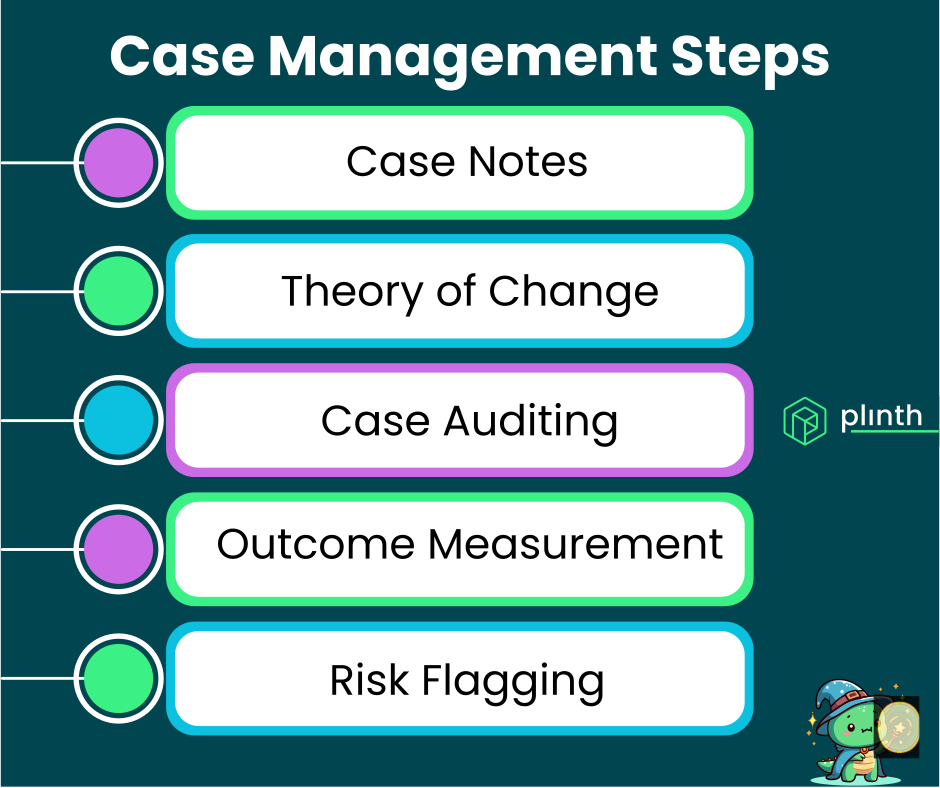
Recording comprehensive, well-organised notes is essential for effective case management. Good documentation supports continuity of care, enables supervision and handover, and provides the evidence needed to demonstrate impact to funders.
What you'll learn: How to record case interactions effectively and consistently across your organisation.
Practical guidance: What to include in notes, how often to document, and how to organise information.
Tool features: How Plinth supports comprehensive interaction tracking.
Why Interaction Tracking Matters
Every touchpoint with the people you support is an opportunity to record valuable information that serves multiple purposes.
Continuity of Care: When multiple staff members work with someone, or when staff change, comprehensive records ensure everyone has access to the same information.
Accountability: Records document what support was provided, when, and by whom – essential for safeguarding, complaints investigation, and regulatory compliance.
Supervision: Good notes allow supervisors to review work quality and provide guidance without having been present at every interaction.
Impact Evidence: Documented interactions provide the raw material for demonstrating outcomes and impact to funders and stakeholders.
The time invested in good documentation pays dividends across every aspect of case management.
Types of Interactions to Record
Different types of interactions require different approaches to documentation, but all meaningful contact should be recorded.
Direct Contact
Record any direct interaction with the individual, whether in person or remote.
Face-to-Face Meetings: Document the date, duration, location, who was present, what was discussed, what support was provided, and any agreed actions.
Phone Calls: Record when the call happened, who initiated it, the main topics discussed, and any outcomes or next steps.
Video Calls: Treat video meetings like face-to-face meetings, noting the platform used if relevant for future reference.
Text and Email: Significant correspondence should be documented, either by copying key content or summarising the exchange.
Direct contact is typically the most important type of interaction to document thoroughly.
Indirect Activity
Work done on behalf of someone without their direct involvement should also be recorded.
Advocacy and Referrals: Document letters written, calls made to other agencies, referrals submitted, and any responses received.
Research and Preparation: Note any significant research or preparation work done on behalf of the individual.
Case Conferences: Record multi-agency meetings, who attended, what was discussed, and decisions made.
Internal Consultation: Document when you've sought advice from colleagues or supervisors about a case.
Indirect work is often substantial but invisible if not documented – recording it captures the full picture of support provided.
Attempted Contact
When you try to contact someone but don't succeed, record the attempt.
Missed Appointments: Document when someone didn't attend a scheduled meeting and any follow-up action taken.
Unanswered Calls: Record attempts to call that weren't answered, particularly when trying to establish or re-establish contact.
Unreturned Messages: Note when messages have been left without response.
Visits Where Not Home: Document unsuccessful home visits and what alternative action was taken.
Attempted contact records are essential for demonstrating engagement efforts and for making decisions about case closure.
Significant Events
Note significant events in the individual's life that affect your support, even if they don't involve direct interaction.
Life Events: Changes in circumstances such as housing moves, job changes, family events, or health changes that you become aware of.
External Agency Contact: Information received from other agencies working with the person.
Incidents: Any incidents or concerns that arise, particularly anything related to safeguarding or risk.
Progress Milestones: Achievements and positive developments that demonstrate progress toward goals.
Significant events provide context that makes other notes more meaningful.
What to Include in Notes
Effective notes capture the right information without becoming unwieldy. Focus on relevance and clarity.
Essential Elements
Every substantive note should include certain core information.
Date and Time: When did the interaction happen? Include the date at minimum; time if relevant.
Who Was Involved: You, the individual, and anyone else present – be specific about names and roles.
What Happened: Describe what occurred, what was discussed, what support was provided.
Outcomes and Actions: What was decided? What will happen next? Who is responsible for what?
These basic elements ensure notes are usable by anyone who needs to understand what happened.
Context and Assessment
Add context that helps readers understand the significance of what's recorded.
Presentation: How did the person present? Were there any changes from previous contact?
Mood and Engagement: Was the person engaged, withdrawn, anxious, positive? Note significant observations.
Risk Indicators: Any observations relevant to risk, whether increasing or decreasing.
Progress Assessment: How does this interaction relate to overall goals and progress?
Contextual information transforms a record of events into a meaningful part of the case narrative.
Specific Details
Include specific details that might be important but easily forgotten.
Quotes: Direct quotes can be powerful evidence and capture the person's voice – use quotation marks to indicate exact words.
Numbers and Dates: Specific figures, amounts, dates, and deadlines mentioned.
Names and Contacts: Names of other people, organisations, or services mentioned.
Commitments: Specific commitments made by you, the individual, or others.
Specific details are often what makes a note genuinely useful rather than vaguely informative.
What to Leave Out
Not everything needs to be in case notes.
Irrelevant Personal Information: Don't record personal details that aren't relevant to the support being provided.
Gossip or Speculation: Stick to facts and observations rather than rumour or unfounded speculation.
Excessive Detail: While detail is good, recording every word of a conversation is rarely necessary or helpful.
Duplicate Information: Don't repeat information already recorded elsewhere if you can reference it instead.
Judicious editing makes notes more useful by keeping them focused and navigable.
Recording Notes in Plinth
Plinth provides comprehensive note-taking features designed for case management contexts.
Creating Notes
Adding notes in Plinth is straightforward and flexible.
Quick Entry: Create notes directly from the case view with a streamlined interface designed for fast documentation.
Rich Formatting: Use formatting options to structure longer notes clearly, making them easier to scan later.
Attachments: Attach relevant documents, images, or files to notes when needed.
Tags: Add tags to categorise notes for easier searching and filtering.
The interface is designed to make documentation easy, reducing the barrier to consistent recording.
Linking Notes to Cases
Notes connect to cases to build a comprehensive case history.
Case Selection: When creating a note, select the relevant case to link the interaction to the individual's case record.
Automatic Updates: Linking a note to a case automatically updates the case's last interaction date, keeping case records current.
Multiple Cases: If you're noting contact with someone who has multiple cases, select the most relevant case or create separate notes.
Non-Case Notes: Notes can also be created for individuals without linking to a specific case, for more general record-keeping.
Case linking ensures that interaction history is complete and accessible from the case view.
Additional Options
Plinth notes support additional features that enhance case management.
Privacy Setting: Mark notes as private when they contain particularly sensitive information that should have restricted access.
Outcome Recording: Record outcomes achieved during the interaction, supporting impact tracking.
Time Tracking: Record time spent on the interaction for workload monitoring and funding reporting.
Status Updates: Update case status and concern level directly when adding a note, keeping case information current.
Additional features integrate note-taking with broader case management without adding complexity.
Building Good Habits
Consistent documentation requires building habits that make it automatic rather than effortful.
Document Promptly
The sooner you document, the better the quality.
Same-Day Recording: Make it a rule to document all significant interactions on the same day they occur.
End-of-Interaction Notes: Where possible, complete notes immediately after each interaction before moving on.
Brief Now, Detail Later: If time is tight, capture key points immediately and add detail within 24 hours.
Block Time: Schedule regular time in your diary specifically for catching up on documentation.
Prompt documentation is both more accurate and less effortful than trying to remember details later.
Use Templates
Consistent structure makes notes easier to write and read.
Personal Templates: Develop your own template or checklist of what to include in different types of notes.
Organisational Standards: Follow any organisational templates or minimum standards for note content.
Adapting as Needed: Templates are starting points, not rigid requirements – adapt to the specific situation while maintaining consistency.
Templates reduce the cognitive load of deciding what to write each time.
Review and Improve
Periodically assess your documentation quality.
Self-Review: Re-read notes from a few weeks ago – would you understand them if you hadn't been there?
Supervision Feedback: Ask for feedback on note quality during supervision.
Peer Learning: Compare note-taking approaches with colleagues and learn from good practice.
Continuous Improvement: Treat documentation as a skill that can always be improved.
Regular reflection prevents gradual drift in documentation quality.
Common Documentation Challenges
Even with good intentions, case workers often face challenges with documentation.
Time Pressure
There never seems to be enough time for documentation.
Recognise Its Value: Documentation is not overhead – it's an essential part of the work that enables quality support.
Efficient Processes: Use tools and templates that make documentation as efficient as possible.
Prioritise: When time is very limited, focus on higher-risk cases and more significant interactions.
Raise Concerns: If documentation is consistently impossible due to workload, raise this with management – it's a quality issue.
Time pressure is real, but skipping documentation creates bigger problems than it solves.
Remembering Details
It's hard to remember conversation details accurately.
Brief Notes During: Jot key points during or immediately after interactions, even if you write the full note later.
Consistent Practice: Regular documentation builds memory skills – you'll remember better with practice.
Focus on Key Points: You don't need to remember everything – focus on the most important information.
Accept Imperfection: No one remembers everything perfectly – documented approximations are better than nothing.
Good habits and immediate note-taking compensate for imperfect memory.
Sensitive Information
Some information is difficult to document appropriately.
Necessary Information: Document sensitive information that's necessary for support purposes, using appropriate language.
Privacy Features: Use privacy settings to restrict access to particularly sensitive notes.
Professional Language: Write sensitively but clearly – future readers need to understand the situation.
Discuss With Supervisors: When unsure about documenting sensitive information, discuss with your supervisor.
Sensitive information can and should be documented – the question is how, not whether.
Frequently Asked Questions
How detailed should notes be?
Detailed enough that someone unfamiliar with the case could understand what happened and why it matters.
The "New Worker" Test: If a new colleague took over the case tomorrow, would your notes give them what they need?
Purpose-Driven: Consider what the note might be used for – supervision, handover, complaints, safeguarding – and ensure it serves those purposes.
Proportionate: Brief contacts need brief notes; significant interactions need more comprehensive documentation.
Err on the side of more detail rather than less, especially for complex or sensitive situations.
What if I can't remember exactly what was said?
Document what you do remember, acknowledging uncertainty where relevant.
Paraphrasing: It's fine to paraphrase conversations – you don't need exact quotes for everything.
Acknowledging Uncertainty: If a detail is important but you're unsure, note that (e.g., "I believe the appointment was on Thursday").
Key Points: Focus on the key points and outcomes rather than trying to recreate every exchange.
Learn for Next Time: If memory is a recurring problem, try taking brief notes during interactions.
Imperfect documentation is better than no documentation.
Should I record my opinions or just facts?
Both, clearly distinguished from each other.
Facts First: Record what actually happened – what was said, what was observed, what was done.
Professional Opinion: Your assessment, concerns, and professional opinion are also valuable – just make clear they're your interpretation.
Distinguish Clearly: Use phrases like "I observed that..." for facts and "In my assessment..." for opinions.
Evidence for Opinions: When stating opinions, note the observations that led to them.
Professional judgment is part of the record, as long as it's clearly labelled as such.
Recommended Next Pages
The Complete Guide to Case Management – Comprehensive coverage of case management principles and features.
Case Management Best Practices for Nonprofits – Expert recommendations for effective case management.
AI-Powered Case Analysis and Summaries – How AI transforms how you work with case notes.
Managing Case Status: Open, Paused, and Closed – When and how to transition cases.
Last updated: July 2026
For more information about case interaction tracking, contact our team or schedule a demo.