What is Case Management?
A clear definition of case management for charities and nonprofits, explaining why structured case tracking is essential for effective support delivery and demonstrating impact.
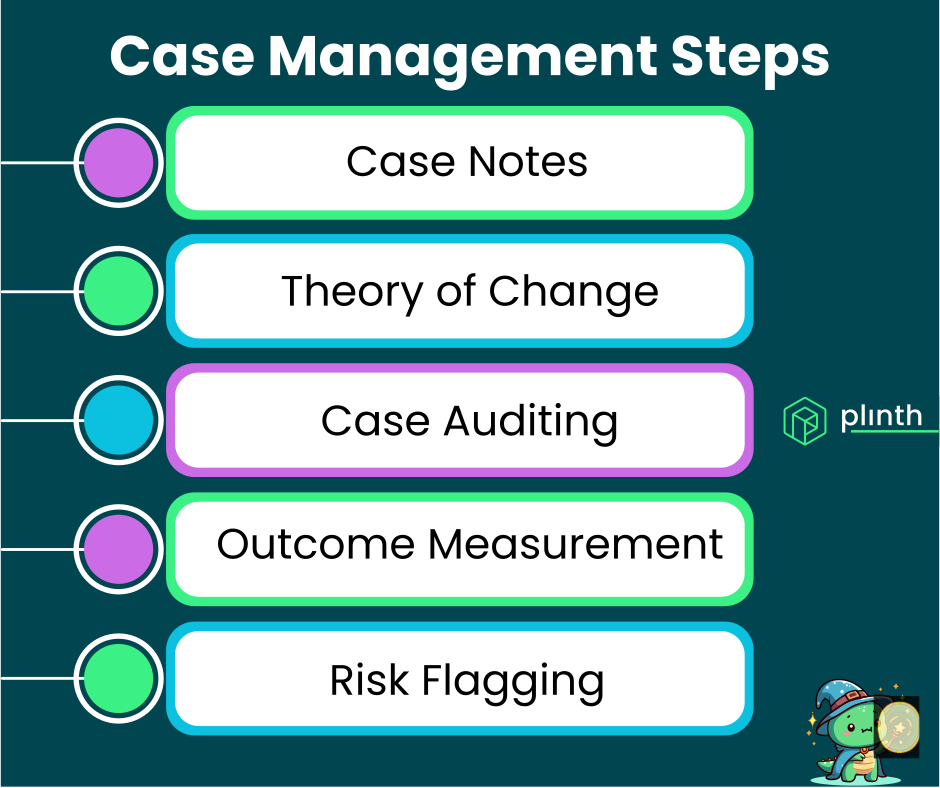
Case management is the structured process of coordinating support for individuals as they move through your organisation's services. It provides a framework for tracking who you're helping, what support you're providing, and what outcomes are being achieved.
What you'll learn: A clear definition of case management and its core components for charity and nonprofit contexts.
Why it matters: Understanding case management fundamentals helps organisations deliver more consistent, effective support.
Getting started: Practical considerations for implementing case management in your organisation.
Case Management Defined
Case management is a collaborative process that assesses, plans, implements, coordinates, monitors, and evaluates the options and services required to meet an individual's needs.
Assessment: Understanding who the person is, what challenges they face, and what support they need through structured intake processes and ongoing evaluation.
Planning: Developing a support plan that outlines goals, actions, and timelines based on the individual's specific circumstances and needs.
Implementation: Delivering the agreed support, whether directly or through coordination with other services and partners.
Monitoring: Tracking progress, recording interactions, and adjusting plans as circumstances change over time.
Evaluation: Measuring outcomes achieved and learning from both successes and challenges to improve future support delivery.
At its core, case management is about ensuring that no one falls through the cracks and that support is delivered in a coordinated, accountable way.
The Core Components
Effective case management systems share several key components that work together to support individuals throughout their journey.
Cases: The fundamental unit of case management – a record that links an individual to ongoing support, tracking all interactions and progress over time.
Case Workers: The people responsible for delivering or coordinating support, with clear assignment ensuring accountability for each case.
Workflows/Pathways: Defined routes that cases follow, such as "Housing Support" or "Employment Programme", providing structure while allowing for individual flexibility.
Status Tracking: Recording whether cases are active, paused, or closed, with clear triggers for status changes and appropriate documentation.
Concern Levels: Indicators of urgency or risk that help prioritise limited resources towards those who need support most urgently.
These components provide the scaffolding that turns ad-hoc support into systematic, accountable service delivery.
Why Case Management Matters
Without structured case management, organisations struggle to provide consistent support and demonstrate their effectiveness to funders and stakeholders.
Consistency: Case management ensures that every person receives appropriate support regardless of which staff member they interact with or when they access services.
Accountability: Clear case ownership means someone is always responsible for following up, preventing individuals from being forgotten or deprioritised.
Visibility: Managers can see what's happening across the organisation, identifying where resources are needed and ensuring quality standards are maintained.
Evidence: Comprehensive records provide the documentation needed for safeguarding, compliance, and demonstrating impact to funders.
Case management transforms support delivery from something that happens in individual workers' heads to something the whole organisation can see, learn from, and improve.
Case Management in Practice
Different types of organisations use case management in different ways, but the core principles remain consistent across sectors.
Advice Services: A citizen seeking help with a benefits issue becomes a case. Their case worker records each appointment, tracks correspondence with the DWP, and documents the outcome when the issue is resolved.
Homelessness Charities: Someone presenting as homeless becomes a case assigned to the "Housing Pathway". Their case worker tracks accommodation placements, support sessions, and progress towards sustainable housing.
Mental Health Services: A person referred for counselling becomes a case. Their therapist records session notes, tracks therapeutic goals, and documents progress over the course of treatment.
Youth Services: A young person joining a mentoring programme becomes a case. Their mentor logs meetings, activities, and observations about the young person's development over time.
The specific details vary, but the fundamental pattern of tracking individuals through coordinated support remains constant.
The Case Lifecycle
Cases typically move through several stages from creation to closure, with clear transitions between each phase.
Intake: A case is created when someone enters your services, capturing their basic information and initial needs assessment.
Assessment: The case worker gathers more detailed information about the person's situation, needs, and goals to inform support planning.
Active Support: The case is "Open" and the case worker provides ongoing support, recording interactions and tracking progress against agreed goals.
Review: Regular review points assess whether the current approach is working and whether adjustments are needed to the support plan.
Closure: When support goals are achieved or the person no longer needs your services, the case is closed with outcomes documented.
Understanding this lifecycle helps organisations design appropriate processes for each stage and ensure smooth transitions.
Manual vs Software-Based Case Management
Organisations can manage cases manually using paper files or spreadsheets, or use purpose-built case management software. Each approach has trade-offs.
Paper and Spreadsheets: Lower initial cost and no learning curve, but makes it difficult to share information, track trends, or generate reports efficiently.
Purpose-Built Software: Higher initial investment in setup and training, but provides centralised access, automatic reporting, and features like AI analysis that are impossible with manual systems.
Hybrid Approaches: Some organisations use spreadsheets for basic tracking while documenting detailed notes elsewhere, though this often creates fragmentation.
Most organisations find that as their caseload grows, the limitations of manual systems outweigh the simplicity, making purpose-built software increasingly valuable.
Getting Started with Case Management
If your organisation doesn't currently have formal case management processes, there are several steps to consider when implementing them.
Define Your Cases: Decide what constitutes a "case" in your context. Is it everyone who uses your services, or only those receiving ongoing support?
Establish Workflows: Identify the main pathways or service types you offer, and create workflow definitions that cases can be assigned to.
Clarify Responsibilities: Determine who can create cases, who can be assigned as case workers, and what supervision structures will support quality.
Set Documentation Standards: Agree what information should be recorded in case notes, how frequently, and what constitutes adequate documentation.
Choose Your Tools: Decide whether to start with manual systems and migrate later, or implement software from the start based on your scale and resources.
Starting with clear definitions and processes is more important than starting with sophisticated tools – though the right software can support good processes effectively.
Frequently Asked Questions
How is case management different from case notes?
Case notes are one component of case management, but case management encompasses much more than just documentation.
Case Notes: The individual records of interactions, observations, and plans documented by case workers during their work with someone.
Case Management: The broader system including workflows, assignments, status tracking, concern levels, supervision, and reporting that organises and makes sense of those notes.
Case notes without case management are just documentation. Case management without case notes lacks the detail needed for effective support.
Do we need software for case management?
Not necessarily, but software provides significant benefits as organisations scale or need to demonstrate impact.
Small Scale: Organisations with a handful of cases and stable staff might manage effectively with well-organised paper files or spreadsheets.
Growing Organisations: As caseloads increase, staff turnover happens, or reporting requirements grow, manual systems typically become unsustainable.
Funding Requirements: Many funders now expect organisations to demonstrate impact with data, which is much easier with software-based case management.
The question isn't whether you need software, but at what point the benefits of software outweigh the costs of implementation.
What's the difference between a case and a client record?
A client or member record captures who someone is, while a case captures a specific episode of support.
Client/Member Record: Contains the person's name, contact details, demographics, and other static information that doesn't change between interactions.
Case: Represents a specific support journey with a start date, assigned worker, status, and eventually an end date when support concludes.
One person might have multiple cases over time – for example, someone might have a housing case in 2024 and a debt advice case in 2025, linked to the same underlying record.
Recommended Next Pages
The Complete Guide to Case Management – Comprehensive coverage of case management principles, features, and best practices.
What Are Case Notes in a Charity? – What case notes are, why they matter, and what they should contain.
How Do Charities Track Beneficiaries? – Methods for tracking the people you support, from spreadsheets to integrated platforms.
Case Management Software for Charities – Why purpose-built tools outperform generic solutions.
Setting Up Case Workflows and Pathways – Practical guidance for designing effective pathways.
How to Track Case Interactions and Notes – Best practices for comprehensive documentation.
Last updated: July 2026
For more information about implementing case management in your organisation, contact our team or schedule a demo.