The Complete Guide to Community Engagement for Housing Associations
How housing associations can build meaningful community engagement programmes that improve resident satisfaction, strengthen neighbourhoods, and demonstrate social value to regulators and funders.
On this page7
Community engagement is no longer a nice-to-have for housing associations. With the Social Housing Regulation Act 2023 placing tenant satisfaction and accountability at the centre of regulatory expectations, housing associations must demonstrate that they are listening to, involving, and responding to their communities. This guide covers everything you need to know about building an effective community engagement programme.
TL;DR: Housing associations that invest in structured community engagement see higher resident satisfaction, stronger regulatory compliance, and measurable social value. The key is moving beyond one-off consultations toward ongoing, data-driven engagement that tracks outcomes and demonstrates impact.
What you'll learn: A comprehensive framework for planning, delivering, and measuring community engagement in a housing association context.
Why it matters: The Regulator of Social Housing now requires registered providers to demonstrate meaningful tenant engagement, and community investment is increasingly linked to funding and reputation.
Getting started: Practical steps to move from ad-hoc engagement toward a structured, measurable programme.
Who this is for: Community investment managers, tenant engagement leads, and housing association directors responsible for resident involvement and social value.
Why Community Engagement Matters for Housing Associations
Housing associations manage approximately 2.9 million homes across England, providing housing for around 6 million people. That scale of responsibility means engagement is not optional — it is fundamental to delivering services that meet residents' needs.
Regulatory Expectations
The Social Housing Regulation Act 2023 introduced new consumer standards that require housing associations to actively seek and respond to tenant feedback. The Tenant Satisfaction Measures (TSMs) now require registered providers to collect and report standardised data on resident satisfaction.
Consumer Standards: The Regulator of Social Housing expects providers to demonstrate transparency, accountability, and responsiveness to tenants.
Tenant Satisfaction Measures: Housing associations must report annually on 22 satisfaction measures, including whether residents feel listened to and whether they feel their landlord treats them with respect.
Proactive Regulation: The shift from reactive to proactive consumer regulation means housing associations can expect greater scrutiny of their engagement practices.
Organisations that treat engagement as a compliance exercise rather than a genuine commitment to listening will struggle to meet these standards authentically.
The Business Case
Beyond regulatory compliance, effective community engagement delivers tangible organisational benefits. Research by HACT (Housing Associations' Charitable Trust) has demonstrated that every pound invested in community programmes can generate between £2 and £10 in social value, depending on the type of intervention.
Reduced Void Costs: Engaged residents are more likely to stay, reducing costly void periods. The average void turnaround costs housing associations between £3,000 and £5,000 per property.
Lower Anti-Social Behaviour: Communities with active engagement programmes tend to report fewer anti-social behaviour incidents.
Improved Rent Collection: Residents who feel heard and respected are more likely to communicate early about payment difficulties, enabling proactive intervention.
Stronger Funding Bids: Funders and local authorities increasingly expect evidence of community engagement when allocating resources.
The return on investment in community engagement is well-documented — the challenge is measuring and communicating it effectively.
Social Value Creation
Housing associations invest significantly in communities across England. This includes employment support, digital inclusion, health and wellbeing programmes, and neighbourhood improvements.
Employment and Training: Many housing associations run employability programmes that help residents into work, generating significant economic value for individuals and communities.
Health and Wellbeing: Community-based health programmes delivered by housing associations can reduce demand on NHS services, particularly for mental health and social isolation.
Digital Inclusion: With an estimated 10 million adults in the UK lacking basic digital skills, housing association digital inclusion programmes address a critical need among social housing residents.
Social value creation is increasingly how housing associations demonstrate their purpose beyond simply providing homes.
Building an Engagement Strategy
Effective community engagement does not happen by accident. It requires a clear strategy, dedicated resources, and systematic tracking of activities and outcomes.
Understand Your Communities
Start by building a detailed picture of the communities you serve.
Demographics: Age profiles, household composition, employment status, and other characteristics that influence how people want to engage.
Existing Assets: Community centres, local organisations, active resident groups, and informal networks that you can build on rather than duplicate.
Barriers to Engagement: Language barriers, digital exclusion, childcare responsibilities, work patterns, accessibility needs, and other factors that prevent people from participating.
Previous Experience: What engagement has been tried before? What worked, what did not, and why?
Understanding your starting point is essential — a strategy designed for one community may fail entirely in another.
Set Clear Objectives
Define what you want engagement to achieve, not just what activities you will deliver.
Outcome-Focused: Rather than "hold four community events per year", aim for "increase the percentage of residents who feel listened to from 55% to 70%".
Measurable: Each objective should have indicators you can actually track, whether through surveys, case management data, or external metrics.
Time-Bound: Set realistic timescales for achieving outcomes, recognising that meaningful change takes time.
Aligned: Ensure engagement objectives connect to your corporate strategy and regulatory obligations.
Clear objectives make it possible to evaluate whether engagement activities are working and justify continued investment.
Choose Appropriate Methods
Different engagement methods suit different purposes and audiences. Research consistently shows that offering multiple channels increases participation, with digitally enabled housing associations tending to see higher engagement rates than those relying solely on traditional methods.
| Method | Best For | Considerations |
|---|---|---|
| Resident surveys | Broad feedback, TSM compliance | Response rates typically 20–35%; consider incentives |
| Community events | Building relationships, informal feedback | Resource-intensive; attendance varies seasonally |
| Digital platforms | Ongoing engagement, younger residents | Requires digital inclusion support for some |
| Resident panels | In-depth input on specific topics | Risk of "usual suspects" — actively recruit diversity |
| Door-to-door visits | Hard-to-reach groups, estate-based issues | Time-intensive but highly effective |
| Social media | Quick updates, community building | Requires active moderation and response |
| Co-design workshops | Service improvement, policy development | Needs skilled facilitation and genuine commitment to act on input |
The most effective programmes use a mix of methods, ensuring that residents can engage in ways that suit them.
Allocate Resources
Community engagement requires dedicated investment of time, staff, and budget.
Dedicated Staff: Assign specific staff responsibility for engagement rather than treating it as something everyone does in addition to their main role.
Budget: Allocate a realistic budget for events, communications, digital tools, and resident expenses (travel, childcare, refreshments).
Training: Invest in staff skills for facilitation, community development, and working with diverse communities.
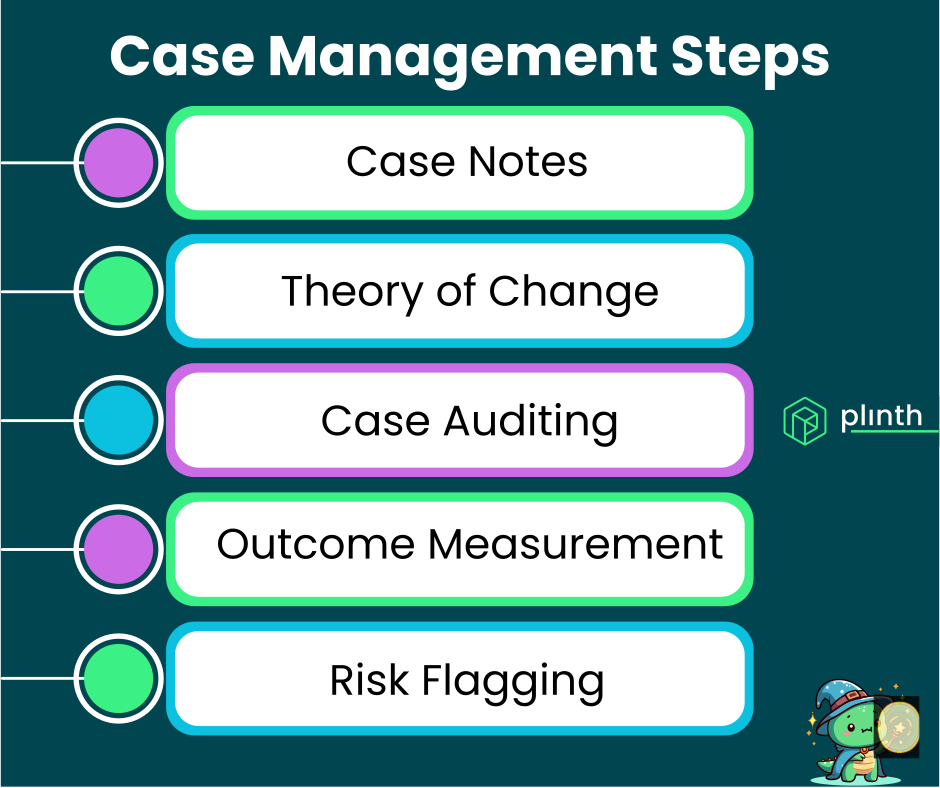
Technology: Use case management and engagement tracking tools to record activities, monitor participation, and measure outcomes systematically.
Under-resourced engagement programmes create cynicism among residents and staff alike.
Tracking and Measuring Impact
The difference between good intentions and effective engagement is measurement. Housing associations need robust systems to track what they are doing, who they are reaching, and what difference it is making.
Activity Tracking
Record all engagement activities systematically rather than relying on memory or scattered documents.
What Happened: Date, type of activity, location, staff involved, and purpose.
Who Participated: Numbers and, where appropriate, demographic information to check whether you are reaching diverse communities.
What Was Raised: Key themes, concerns, suggestions, and commitments made by the housing association.
Follow-Up Required: Actions agreed, responsibilities assigned, and deadlines set.
Systematic activity tracking is the foundation of impact measurement — without it, you cannot demonstrate what you have done or what resulted from it.
Outcome Measurement
Track whether engagement activities are achieving the outcomes you intended.
Satisfaction Metrics: Monitor TSM scores and internal satisfaction surveys over time, looking for trends linked to engagement activities.
Behavioural Indicators: Track metrics like rent arrears, anti-social behaviour reports, complaints, and void rates in areas where engagement programmes are active.
Qualitative Evidence: Collect resident stories and case studies that illustrate the difference engagement makes in ways that numbers alone cannot capture.
Social Value Calculation: Use frameworks such as HACT's UK Social Value Bank to quantify the social and economic value generated by community programmes. The Social Value Bank includes 88 methodologically robust outcome values across categories such as employment, health, financial inclusion, and local environment, which housing associations can use to monetise outcomes.
Combining quantitative metrics with qualitative evidence gives the fullest picture of engagement impact.
Reporting and Communication
Share what you learn from engagement — both internally and with residents.
You Said, We Did: Regularly communicate back to residents what you heard and what you have done about it. This closes the feedback loop and builds trust.
Board Reporting: Present engagement data and outcomes to your board regularly so it informs strategic decision-making.
Regulatory Compliance: Ensure your engagement data supports your TSM submissions and any regulatory returns.
Impact Reports: Use impact reporting tools to produce compelling evidence of community investment and outcomes for stakeholders.
Reporting is not just about accountability — it is about demonstrating value and building the case for continued investment.
Digital Engagement and Case Management
Technology can significantly enhance community engagement by making it easier to track, coordinate, and report on activities.
Case Management for Engagement
Purpose-built case management software helps housing associations track individual resident engagement journeys.
Individual Records: Link engagement activities to individual resident records so you can see the full picture of each person's interaction with your services.
Concern Tracking: Flag residents who raise concerns and track how those concerns are resolved, ensuring nothing falls through the cracks.
Workflow Management: Create structured workflows for common engagement processes such as complaints handling, community programme referrals, or panel recruitment.
Team Coordination: When multiple staff interact with residents, shared case records ensure continuity and prevent residents having to repeat themselves.
Technology supports engagement but does not replace the human relationships at its core.
Data-Driven Decisions
Use engagement data to make better decisions about where to focus resources.
Participation Patterns: Identify which communities or demographics are under-represented in engagement and target outreach accordingly.
Issue Trends: Spot recurring themes across engagement activities to inform service improvement and investment priorities.
Predictive Indicators: Use engagement data alongside other indicators to identify estates or communities that may need additional support before problems escalate.
Data-driven engagement is more equitable because it highlights gaps that intuition alone might miss.
Common Challenges and Solutions
Engagement Fatigue
Residents being asked repeatedly for feedback without seeing results.
The Problem: Over-consultation without visible action creates cynicism and declining participation. According to the Regulator of Social Housing's 2024/25 Tenant Satisfaction Measures, around two-thirds of housing association residents feel their landlord listens to their views and acts on them — meaning roughly a third do not, with significant variation between providers.
The Solution: Always close the feedback loop. Prioritise "you said, we did" communications. Be honest about what you cannot change and explain why.
Less frequent but more meaningful engagement is better than constant consultation with no visible impact.
Reaching Diverse Communities
Traditional engagement methods often reach the same small group of residents.
The Problem: Resident panels and community meetings tend to attract a narrow demographic, typically older, more confident, longer-term residents.
The Solution: Use multiple channels, go to where people already are, offer engagement in different languages and formats, and actively remove barriers such as childcare and transport costs.
Truly representative engagement requires deliberate effort to reach beyond the "usual suspects".
Demonstrating Value Internally
Securing ongoing investment in community engagement within the organisation.
The Problem: When budgets are tight, engagement activities can be seen as discretionary spending rather than core business.
The Solution: Use robust impact measurement and social value calculation to demonstrate return on investment. Link engagement outcomes to organisational priorities such as TSM scores, rent collection, and void rates.
Evidence-based advocacy is more persuasive than assertion — invest in measuring what your engagement achieves.
Staff Capacity
Front-line staff feeling stretched between engagement activities and other responsibilities.
The Problem: Housing association staff frequently report that administrative tasks limit the time available for direct resident engagement.
The Solution: Use technology to reduce administrative burden. AI-powered case notes can save significant time on documentation, freeing staff for face-to-face engagement.
Technology should remove friction from engagement, not add to it.
Frequently Asked Questions
How much should a housing association invest in community engagement?
There is no single benchmark, but the National Housing Federation reports that housing associations invest significantly in community programmes. Individual investment varies significantly based on stock size, geographic spread, and organisational strategy. A common approach is to allocate a per-property community investment budget, typically ranging from £20 to £100 per home annually for dedicated engagement activities beyond core landlord services.
How do we measure the social value of community engagement?
The most widely used approach in the housing sector is HACT's Social Value Bank, which provides monetised values for a range of community outcomes such as improved wellbeing, employment, volunteering, and reduced anti-social behaviour. This enables housing associations to calculate a social return on investment using a consistent, sector-recognised methodology. Combining this with qualitative evidence and case studies provides a rounded picture of impact.
What are the Tenant Satisfaction Measures (TSMs) and how do they relate to engagement?
TSMs are a set of 22 measures introduced by the Regulator of Social Housing under the Social Housing Regulation Act 2023. Housing associations must collect and report these annually. Several TSMs directly relate to engagement, including measures of whether residents feel listened to, treated with respect, and kept informed about things that matter to them. Strong engagement programmes directly support better TSM scores.
How can technology support community engagement?
Technology supports engagement in several ways: digital platforms enable residents to communicate and provide feedback outside business hours; case management software tracks engagement activities and outcomes systematically; data analytics identify trends and gaps in participation; and AI tools reduce administrative burden so staff have more time for direct engagement. The key is choosing tools that integrate with existing workflows rather than creating additional complexity.
How do we engage residents who do not attend meetings or events?
Most residents will never attend a formal meeting, so effective engagement requires meeting people where they are. This includes door-to-door visits, digital channels, presence at existing community events, short surveys delivered via text or email, and engagement through trusted community organisations. Research suggests that multi-channel approaches reach significantly more residents than meeting-only strategies.
Recommended Next Pages
How Housing Associations Can Report on Community Impact – Turn engagement data into compelling evidence for regulators and funders.
Case Management for Housing Associations: Best Practices – Structured approaches to managing resident support.
Housing Association Community Software vs Generic CRM – Choosing the right tools for engagement and case management.
Housing Associations – How Plinth supports housing associations with community engagement and impact reporting.
Last updated: February 2026
For more information about community engagement tools for housing associations, contact our team or schedule a demo.