Case study overview
This case study is built around a structured Q&A with Point North. The same questions and answers are marked up for accessibility and included in the page’s FAQ structured data, so the content is easy for people and for search/answer systems to interpret.
Q&A with Point North Community Foundation
The questions and answers below are also output as FAQ structured data (JSON-LD) on this page for search engines and other tools.
Can you tell us a bit about Point North Community Foundation and the work that you do?
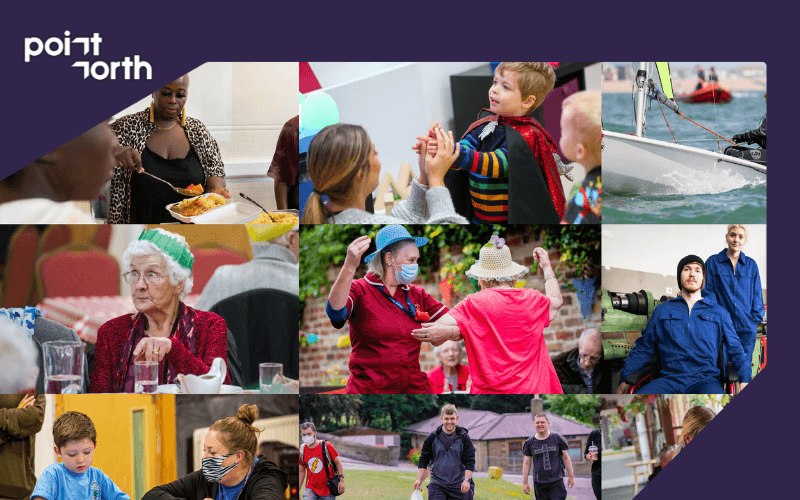
Point North is a Community Foundation and one of 47 such foundations across the UK. Our coverage spans County Durham, Tees Valley, the North East, and beyond. Our primary mission is to work with donors to deliver funding to communities most in need. Our focus is primarily on addressing poverty in various forms — rural poverty, urban poverty, and child poverty. County Durham has some of the highest rates of child poverty in the UK, making our work essential. In addition to tackling poverty, we support a wide range of community initiatives, including those funded through wind farm funds, which allow us to extend support to environmental and sustainability projects. This year is particularly special for us as we are celebrating our 30th anniversary.
What makes the work of Point North unique compared to other foundations?
Our foundation is distinctive because, despite being a relatively small team, we manage a substantial amount of funding — £5.7 million last year and £7.1 million the year before. Over our 30-year history, we have distributed £71 million in grants, with the majority of this funding awarded since 2018. Our unique approach lies in our ability to balance scale with personal engagement. We maintain close relationships with donors, including long-standing family donors and businesses committed to corporate social responsibility. Our focus on poverty is not just about providing financial assistance — it's about creating opportunities, building resilience, and enhancing the quality of life for individuals and communities.
What were the main challenges you faced in your grant management process before using Plinth?
Our primary challenges were the increasing number of applications — around 1,500 annually — and the limited capacity of our small team to manage these efficiently. Despite having a dedicated team, ensuring consistency and quality in assessments was difficult, especially when new staff joined. We were also concerned about maintaining an unbiased and equitable assessment process. As the number of applications grew, so did the potential for inconsistency, and we found it challenging to maintain rigorous standards without overburdening our team. We needed a system that could handle the volume of applications while preserving the integrity of our assessments.
How did you discover Plinth, and what led to its implementation at Point North?
Our journey with Plinth began when we recognised the need for a more efficient way to manage our grant applications. We explored several options, including discussions with Durham University and other providers, but these solutions were either too complex, too costly, or too reliant on our input for setup. Plinth was introduced as a streamlined solution that could support our team without compromising the quality of our grant assessments. After initial discussions and trials, we decided to adopt Plinth, and it has become an integral part of our operations.
How would you describe the impact of Plinth on your grant management process?
Plinth has been genuinely transformational. It has dramatically improved the speed and efficiency of our assessments without sacrificing quality. A key example is that a single fund manager can now complete all assessments for their programme, ensuring consistency and maintaining high standards. Beyond this, Plinth has enhanced our ability to tailor reports for donors, aligning them with specific donor requirements and preferences. It has also become a powerful tool for staff training, highlighting best practices and helping new team members quickly understand our assessment criteria.
Plinth has been genuinely transformational. It has dramatically improved the speed and efficiency of our assessments without sacrificing quality. A key example is that a single fund manager can now complete all assessments for their programme, ensuring consistency and maintaining high standards.
Sharon Gollan
Head of Grants, Point North Community Foundation
Were there any unexpected benefits you discovered after implementing Plinth?
Absolutely. Plinth has not only made our assessment process more efficient but has also improved the quality of our data collection and reporting. We now use Plinth for monitoring grants, allowing us to track the impact of funding on communities, identify challenges faced by recipient organisations, and gather insights that inform our future funding decisions. This ability to capture and analyse data has been invaluable for demonstrating impact to donors and enhancing our strategic decision-making.
How has Plinth helped with data management and reporting?
Plinth has revolutionised our data management. It allows us to create bespoke reports for donors, incorporating the specific data they are interested in. We can easily track outcomes, measure the impact of funded projects, and analyse trends over time. This has not only improved our internal reporting processes but has also strengthened our relationships with donors by providing them with clear, data-driven insights into the impact of their contributions.
Plinth has revolutionised our data management. It allows us to create bespoke reports for donors, incorporating the specific data they are interested in.
Sharon Gollan
Head of Grants, Point North Community Foundation
What was the training and onboarding experience like with Plinth?
The onboarding experience was smooth and intuitive. We received dedicated training from Tom, and the system's user-friendly design made it easy for our team to adapt. Any issues we encountered were quickly resolved through a dedicated Teams channel, where we received prompt and effective support. This level of ongoing support has been crucial to our success with Plinth.
Did you have any concerns about using an AI-powered system like Plinth?
Initially, there were some concerns, particularly around the ethics of using AI in a process as important as grant management. However, we quickly realised that Plinth is not a replacement for human judgement — it is a tool that supports our team, making their work faster and more accurate. We have full control over the data it uses, and it only provides insights based on the information we supply. This ensures transparency and maintains the integrity of our assessments.
Would you recommend Plinth to other organisations, and why?
Without hesitation. Plinth has effectively become an additional team member, enabling us to process and assess a much larger volume of applications without compromising quality. It is cost-effective, reliable, and has significantly enhanced our operational capacity. We would, however, emphasise the importance of proper staff training to ensure teams can make the most of the system's capabilities.
Author

Sean Sinanan
Impact Lead
Oxford (PPE) graduate: social mobility, youth empowerment, and TechForGood work after the Civil Service—focusing on how technology can be used for community benefit, including social impact (see our team page for the full profile).
Sean on LinkedInThis page is published by Plinth to explain how organisations use the platform. Point North Community Foundation is an independent organisation; inclusion here does not imply that they endorse every statement Plinth may make elsewhere, or that every product capability applies identically in other settings. Numbers and public impact claims should be confirmed with the organisation where needed.