Glossary of Case Management Terms
A quick reference guide to common case management terminology used in charity and nonprofit settings. Clear definitions for case workers, managers, and anyone new to the field.
On this page18
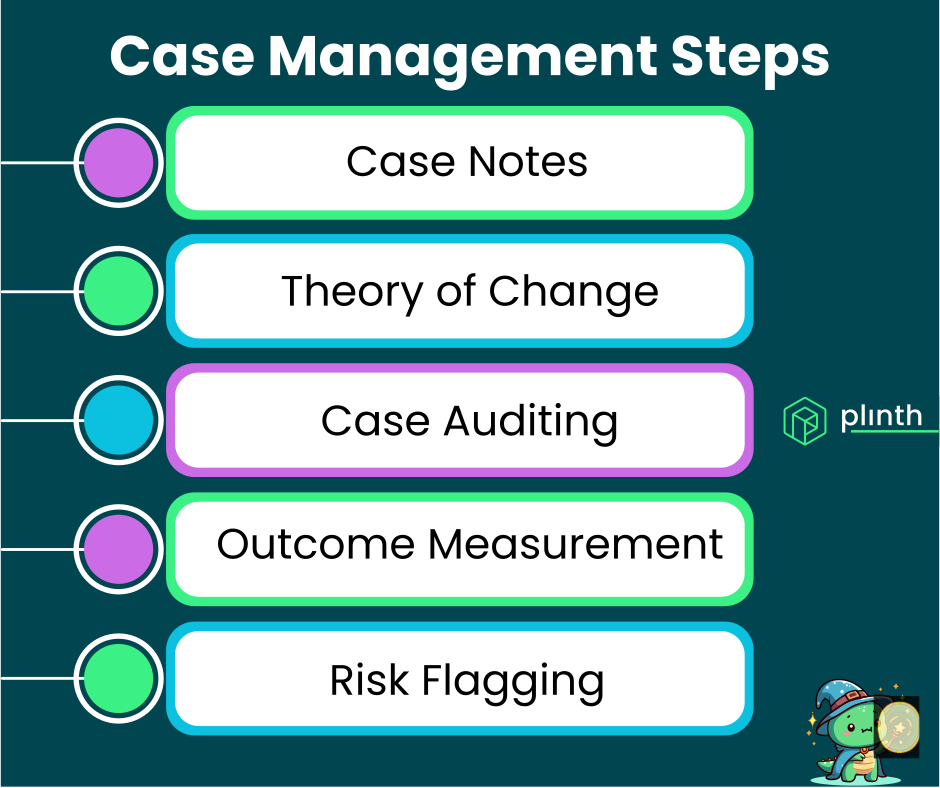
This glossary provides clear definitions for common terms used in charity and nonprofit case management. Use it as a reference when encountering unfamiliar terminology or when training new team members.
A
Active Case
A case that is currently open and receiving support. Active cases require ongoing attention and documentation.
Assessment
The process of gathering information about an individual's circumstances, needs, and goals to inform support planning. Assessments may be conducted at intake and periodically throughout the case.
Assignment
The process of designating a case worker to be responsible for a particular case. See also: Case Worker.
C
Case
A record that tracks your organisation's support relationship with an individual over a defined period. Cases typically include notes, interactions, outcomes, and other documentation related to the support provided.
Case Closure
The formal ending of a case, indicating that support has concluded. Closure may occur for various reasons including goal achievement, disengagement, or referral elsewhere. See also: Closed Status.
Case Conference
A meeting involving multiple parties (often from different organisations) to discuss and coordinate support for a particular individual or family.
Case History
The complete record of a case from creation to current date (or closure), including all notes, interactions, and status changes.
Case Load / Caseload
The total number of cases assigned to a particular case worker or team. May be measured in total cases or weighted by complexity.
Case Management
The structured process of coordinating support for individuals as they move through an organisation's services, including assessment, planning, implementation, monitoring, and evaluation.
Case Management Software
Digital tools designed to support case management activities, including case creation, note-taking, status tracking, reporting, and analysis. Examples include Plinth.
Case Note
A written record of an interaction, observation, or activity related to a case. Case notes form the primary documentation of support provided.
Case Review
A structured examination of a case's progress, typically conducted in supervision or team meetings, to ensure appropriate support is being provided.
Case Worker
The person assigned primary responsibility for coordinating support for a particular case. Also known as key worker, support worker, or lead worker in different contexts.
Closed Status
The case status indicating that support has concluded and the case is no longer active. Cases in closed status typically have an end date recorded.
Concern Level
An indicator of the current level of risk, urgency, or need associated with a case, used to prioritise attention. Common levels are Low, Medium, and High.
Continuity of Care
The consistent, coordinated delivery of support over time, particularly when multiple workers or services are involved.
D
De-escalation
The process of reducing a case's concern level when risk or urgency has decreased. The opposite of escalation.
Disengagement
When an individual stops participating in or responding to support, whether temporarily or permanently.
Documentation
The process of creating and maintaining written records of case activity, including notes, assessments, plans, and outcomes.
E
Engagement
An individual's participation in and connection with support services. High engagement typically indicates active participation; low engagement may indicate risk of dropout.
Escalation
The process of increasing a case's concern level when risk or urgency has increased, or referring a concern to management for attention.
End Date
The date on which a case was closed. Automatically recorded in Plinth when a case moves to closed status.
F
Follow-Up
Contact made to check on progress, remind about appointments, or maintain connection with an individual.
H
Handover
The process of transferring responsibility for a case from one worker to another, ensuring continuity of information and support.
High Concern
The concern level indicating significant risk or urgency requiring priority attention. Typically displayed with red colour coding.
I
Impact
The outcomes and changes achieved through support, both for individuals and at an organisational level.
Intake
The process of initially receiving and assessing someone seeking support, often the first step in creating a case.
Interaction
Any contact or activity related to a case, whether direct (with the individual) or indirect (on their behalf).
K
Key Worker
Alternative term for case worker in some organisations. The person with primary responsibility for coordinating an individual's support.
L
Low Concern
The concern level indicating a stable situation with no significant risks requiring special attention. Typically displayed with green colour coding.
M
Medium Concern
The concern level indicating some risks or instability requiring increased monitoring but not crisis response. Typically displayed with amber/orange colour coding.
Member
In Plinth, the term used for individuals your organisation supports. Cases are linked to members.
Monitoring
The ongoing process of tracking a case's progress, risk factors, and outcomes over time.
N
Note
See Case Note.
O
Open Status
The case status indicating the case is active and receiving ongoing support. The default status for cases being worked.
Outcome
A specific result or change achieved through support, often linked to support goals. Outcomes may be recorded at case level or organisational level.
Oversight
Management review and supervision of cases and case workers to ensure quality and accountability.
P
Pathway
See Workflow.
Paused Status
The case status indicating temporary suspension of active support, with expectation of resuming. Used when support needs to pause but the case isn't ready to close.
Private Note
A case note marked as confidential with restricted access, typically for particularly sensitive information.
Prioritisation
The process of deciding which cases or tasks should receive attention first, often informed by concern levels and urgency.
R
Reassignment
The process of transferring a case from one case worker to another.
Referral
Connecting an individual with another service or organisation for support you cannot provide.
Reopen
The process of changing a closed case back to open status when support needs to resume.
Risk Assessment
The process of identifying and evaluating potential risks associated with a case, informing concern level and support planning.
S
Safeguarding
Policies and practices to protect vulnerable people from harm, abuse, or neglect. Proper case management supports safeguarding through documentation and accountability.
Self-Assignment
A model where case workers select cases from an unassigned pool rather than having cases allocated by management.
Start Date
The date on which a case was created, marking the beginning of the support episode.
Status
The current state of a case in its lifecycle. In Plinth, statuses are Open, Paused, and Closed.
Supervision
Regular structured meetings between case workers and their managers to review cases, provide support, and ensure quality.
Support Plan
A documented agreement about the goals, activities, and timeline for support, developed with the individual being supported.
T
Transition
The process of moving a case between statuses, workers, or services.
Triage
The process of quickly assessing new referrals or contacts to determine urgency and appropriate response.
W
Weekly Summary
A concise summary of recent case activity, often generated for supervision or team meetings. Plinth can generate these automatically using AI.
Workload
The total work demands on a case worker, including their caseload plus other responsibilities.
Workflow
A defined route or pathway that cases can follow through your services, representing a type of support or programme. Also called a pathway. Workflows help organise cases by service type.
Further Reading
What is Case Management? – Foundational concepts explained.
The Complete Guide to Case Management – Comprehensive coverage of case management.
Case Management for Charities: A Beginner's Guide – Getting started guide for organisations new to case management.
Last updated: May 2026
For more information about case management terminology and concepts, contact our team or schedule a demo.