How to Assign and Manage Case Workers
Best practices for assigning cases to workers, managing caseloads equitably, and handling transitions when staff change. Practical guidance for charity managers and team leads.
On this page10
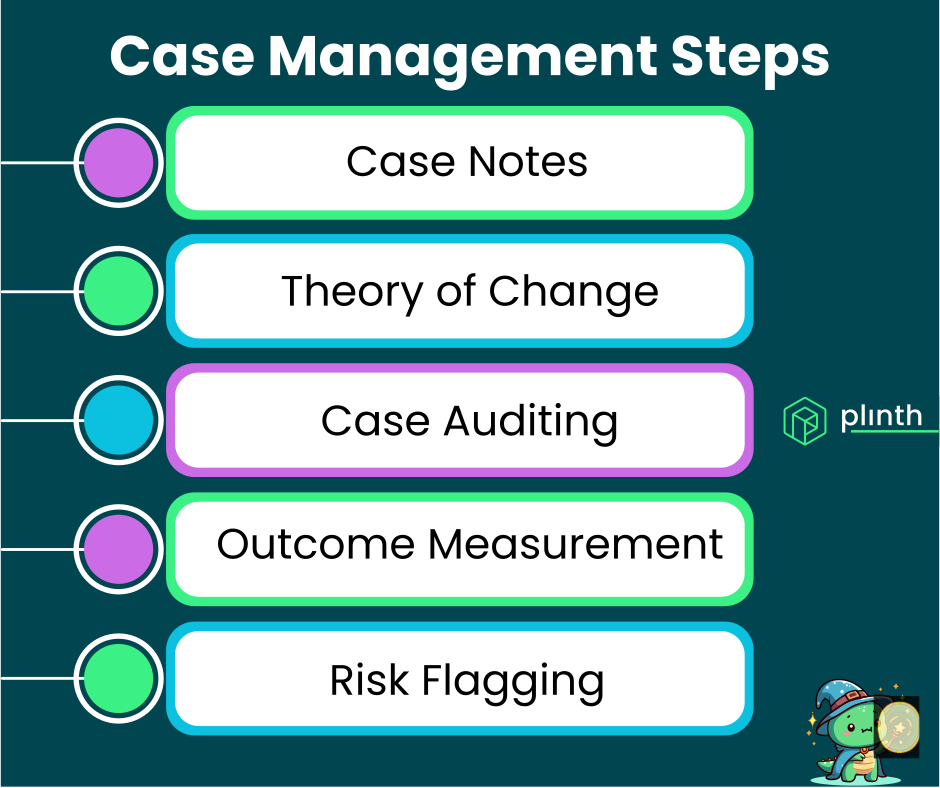
Clear case worker assignment ensures accountability for every case while supporting equitable workload distribution across your team. Good allocation practices improve outcomes for the people you support and help prevent staff burnout. With 75% of charity workers having personally experienced or witnessed burnout in the past 12 months according to Merrifield Consultants research, getting caseload management right has never been more important.
What you'll learn: How to assign cases effectively and manage workload distribution fairly.
Practical guidance: Strategies for allocation, reassignment, and handling staff transitions.
Team management: Supporting case workers to manage their caseloads sustainably.
Why Assignment Matters
Every case should have a clearly designated case worker who takes responsibility for coordinating support. Research consistently shows that relationship continuity improves outcomes: a systematic review in BMC Psychiatry found that higher relational continuity of care may prevent premature deaths, reduce emergency visits, and contribute to better quality of life for people with serious mental illness.
Accountability: Clear assignment means someone is always responsible for following up, ensuring cases don't fall between the cracks. When responsibility is ambiguous, important tasks get missed.
Continuity: Consistent assignment builds relationship and understanding over time. Research published in the American Journal of Managed Care found that longitudinal, relationship-based case management led to substantial cost reductions and enhanced quality of life compared to transactional approaches.
Visibility: Managers can see who is responsible for what, enabling effective oversight and support. This visibility is essential for identifying when workers need help before problems escalate.
Fairness: Systematic assignment helps ensure workload is distributed equitably across the team. Uneven distribution is a major contributor to burnout, which affects nearly a third of charities according to sector surveys.
Without clear assignment, important tasks get missed and support quality suffers.
Assignment Models
Organisations use different approaches to allocating cases, each with advantages and trade-offs.
Manager-Led Allocation
Managers or team leads assign cases to workers based on capacity and suitability.
How It Works: When new cases arrive, a manager reviews them and assigns to appropriate workers based on current caseloads, skills, and case requirements.
Advantages: Enables strategic matching of cases to workers, supports equitable distribution, and maintains management oversight.
Disadvantages: Creates a bottleneck if the manager is unavailable, requires manager to understand all cases and worker capacities.
Best For: Teams where manager has good visibility of both incoming cases and worker capacity.
Manager-led allocation provides most control but requires active management attention.
Self-Assignment
Workers select cases from a pool of unassigned cases.
How It Works: New cases go into an unassigned pool. Workers claim cases as they have capacity, often with manager oversight.
Advantages: Workers have agency over their caseload, reduces bottleneck at manager, may improve engagement and ownership.
Disadvantages: Risk of "cherry-picking" easier cases, may result in uneven distribution, requires monitoring.
Best For: Experienced, self-managing teams with good professional culture.
Self-assignment empowers workers but needs guardrails to ensure fairness.
Automatic Allocation
Cases are assigned automatically based on rules or rotation.
How It Works: Systems automatically assign cases based on criteria like round-robin rotation, geographic area, or specialty matching.
Advantages: Fast and consistent, removes human judgment (and potential bias) from basic allocation.
Disadvantages: Doesn't account for nuances like current workload intensity, may need manual overrides.
Best For: High-volume services with relatively homogeneous cases where speed matters.
Automatic allocation provides efficiency but needs override mechanisms for exceptions.
Hybrid Approaches
Many organisations combine elements of different models.
Example: Automatic allocation with manager review and reassignment ability.
Example: Self-assignment from a pre-filtered pool that manager has screened.
Example: Manager allocation of complex cases, self-assignment of routine cases.
Hybrid approaches can capture benefits of multiple models while mitigating downsides.
Comparing Assignment Models
| Model | Speed | Equity | Manager Time | Worker Agency | Best For |
|---|---|---|---|---|---|
| Manager-Led | Moderate | High | High | Low | Teams needing close oversight |
| Self-Assignment | Fast | Variable | Low | High | Experienced, trusted teams |
| Automatic | Very Fast | Moderate | Very Low | None | High-volume, uniform cases |
| Hybrid | Moderate | High | Moderate | Moderate | Most charity contexts |
Factors in Assignment Decisions
When allocating cases, consider multiple factors that affect the quality of the match.
Worker Capacity
Don't assign cases without considering current workload.
Current Caseload: How many cases does this worker already have? Are they near capacity?
Complexity Mix: What's the complexity of their current cases? A worker with several high-concern cases may have less capacity for new cases than raw numbers suggest.
Other Commitments: What other work demands exist? Training, projects, annual leave coming up?
Recent Trends: Has this worker been receiving more than their share of cases recently?
Capacity-blind allocation leads to overload for some workers while others have room to take more.
Skills and Experience
Match case requirements to worker capabilities.
Specialist Knowledge: Does the case require specialist knowledge that only some workers have?
Experience Level: Is this case appropriate for a new worker, or does it need someone more experienced?
Development Opportunities: Could this case provide good development experience for a worker building new skills?
Personal Strengths: Does the worker have particular strengths that match this case's needs?
Thoughtful matching improves outcomes and supports professional development.
Continuity Considerations
Consider existing relationships and service continuity.
Previous Contact: Has this person worked with any of our team before? Continuity often helps.
Long-Term Relationship: If this is likely to be a long case, who can sustain that relationship?
Cover Arrangements: Who will cover this case during absence, and does that affect primary assignment?
Team Stability: If a worker is likely to leave soon, consider whether to assign new long-term cases.
Continuity of relationship matters for support quality.
Practical Factors
Don't overlook practical considerations.
Location: If support involves home visits, geographic proximity may matter.
Availability: Does the worker's schedule align with the individual's needs?
Language: Does the individual need support in a particular language?
Gender/Cultural Considerations: Are there any factors that mean a particular type of worker would be more appropriate?
Practical factors affect whether support can actually be delivered effectively.
Managing Caseload Distribution
Ensuring fair distribution requires ongoing attention, not just good initial allocation.
Monitoring Distribution
Regularly review how cases are distributed across the team.
Caseload Numbers: Track how many cases each worker holds – are numbers roughly equitable?
Complexity Weighting: Simple case counts don't tell the whole story – also consider the complexity or concern level mix.
Trend Analysis: Is any worker consistently receiving more cases than others over time?
Exception Review: Are some workers always assigned difficult cases due to their skills? Is this fair?
Regular monitoring catches distribution problems before they become serious.
Addressing Imbalances
When distribution becomes uneven, take action.
Immediate Redistribution: If one worker is significantly overloaded, redistribute some cases to others with capacity.
Future Allocation: Adjust allocation approach so the worker with fewer cases receives more of the incoming cases.
Structural Issues: If imbalance is structural (e.g., one worker has unique specialist skills), consider training others or accepting the imbalance explicitly.
Transparent Discussion: Discuss distribution openly with the team rather than making adjustments secretly.
Proactive rebalancing prevents burnout and maintains service quality.
Supporting Struggling Workers
When someone is struggling with their caseload, act early. According to Third Sector research, 94% of charity workers report experiencing stress, overwhelm, or burnout over the past year, yet just 12% feel their organisation is well equipped to handle burnout.
Early Identification: Watch for warning signs like documentation backlogs, missed contacts, or expressions of stress. Case management software can help by showing which workers have overdue tasks or haven't updated cases recently.
Non-Judgemental Conversation: Explore what's happening without blame – is it capacity, complexity, personal circumstances, or something else? The answer determines the right response.
Temporary Relief: Consider temporarily reducing caseload or reassigning some cases while issues are addressed. This is not a punishment but a practical support measure.
Skill Building: If the struggle relates to skills, provide training and support rather than just removing cases. Pair struggling workers with experienced colleagues for shadowing or co-working.
Systemic Review: If multiple workers are struggling, the problem may be structural rather than individual. Review whether caseload expectations are realistic given case complexity and other demands.
Supporting struggling workers is both humane and practical – burnout hurts everyone.
The Cost of Poor Assignment Practices
Getting case assignment wrong has real consequences for the people you support, your team, and your organisation.
Service Quality: When cases fall through the cracks or workers are overwhelmed, support quality suffers. People miss appointments, follow-ups don't happen, and relationships break down.
Staff Turnover: The turnover rate in the independent adult social care sector was 24.7% in 2024/25 (overall sector turnover was 23.7%), with poor workload management a significant contributor. Replacing experienced staff is expensive and disrupts continuity for the people you support.
Burnout Cascade: When one worker leaves, their cases must be redistributed. If this pushes other workers over capacity, you risk a cascade of burnout and departures.
Safeguarding Risks: Overloaded workers may miss warning signs or delay urgent actions. Clear assignment and manageable caseloads are safeguarding measures, not just operational conveniences.
Reputational Damage: Poor outcomes and high staff turnover affect your reputation with funders, referrers, and the communities you serve.
Investing in good assignment practices is investing in sustainable, high-quality service delivery.
Handling Transitions
Staff changes require careful management of case transitions.
Planned Departures
When staff leave, plan the transition well in advance.
Early Planning: Start transition planning as soon as departure is known – don't wait until the final days.
Case Review: Review the departing worker's caseload and decide appropriate recipients for each case.
Graduated Handover: Where possible, introduce the new worker before the old one leaves, especially for complex cases.
Documentation Check: Ensure documentation is up to date before the worker leaves.
Well-planned departures minimise disruption to the people you support.
Receiving Transferred Cases
Workers receiving transferred cases need adequate support.
Orientation Time: Allow time for the receiving worker to review case histories, not just receive assignment.
Handover Information: The departing worker should provide verbal briefing on cases, not just written records.
Relationship Building: Receiving workers need time to build new relationships – don't expect immediate effectiveness.
Capacity Adjustment: If a worker receives multiple transferred cases, consider reducing new case allocation temporarily.
Good transfers set up the receiving worker for success.
Unplanned Departures
Sudden departures require emergency processes.
Cover Arrangements: Have defined processes for who covers cases when someone is unexpectedly absent.
Temporary vs Permanent: Distinguish between temporary cover (expecting return) and permanent reassignment.
Prioritisation: With limited capacity, prioritise high-concern cases for immediate attention.
Communication: Inform affected individuals about the change and who their new contact is.
Preparation for unplanned departures reduces crisis when they occur.
Building an Assignment Policy
Formalising your approach to case assignment helps ensure consistency and fairness.
What to Include
A good assignment policy covers the key decisions your team makes regularly.
Allocation Method: Who assigns cases, and how? Document your chosen model (manager-led, self-assignment, automatic, or hybrid) and any exceptions.
Capacity Limits: What's the maximum caseload for different roles? Include guidance on how complexity affects these limits.
Matching Criteria: What factors should be considered when matching cases to workers? Skills, experience, geography, language, existing relationships?
Reassignment Triggers: When should cases be reassigned? Staff departure, workload imbalance, relationship breakdown, skills mismatch?
Cover Arrangements: How is cover handled for planned and unplanned absence?
Escalation Process: What happens when the normal allocation process isn't working or creates unfair outcomes?
Review and Update
Your policy should be a living document.
Regular Review: Review the policy annually, or when significant changes occur (new services, team restructures, system changes).
Team Input: Involve case workers in developing and reviewing the policy – they understand the practical realities.
Data-Informed: Use data from your case management system to identify patterns and inform policy updates.
A written policy creates clarity and enables consistent practice across the team.
Case Worker Assignment in Plinth
Plinth provides straightforward case worker management with full visibility, designed specifically for charities and public sector teams.
Assigning Workers
Assignment is simple and flexible, supporting whatever allocation model works for your team.
At Case Creation: Assign a case worker when creating a new case – the current user is suggested as default, but you can select any team member.
Updating Assignment: Change case worker at any time from the case view by selecting a different team member. The change is logged automatically.
Self-Assignment: Workers with appropriate permissions can assign cases to themselves, supporting self-assignment models without requiring manager intervention.
Bulk Reassignment: When staff leave or caseloads need rebalancing, reassign multiple cases efficiently rather than one at a time.
Simple assignment mechanics support whatever allocation model you use.
Visibility Features
See who's responsible for what across the team, making workload management straightforward.
Case Lists: Case worker displays in case tables, showing at a glance who owns each case. Sort by worker to group cases together.
Filter by Worker: Filter the case view by worker to see an individual's full caseload, broken down by status and concern level.
Workload Overview: Managers can quickly review how cases are distributed across the team, identifying potential imbalances before they become problems.
Activity Tracking: See when cases were last touched, helping identify where attention is needed. Cases without recent activity are flagged for follow-up.
Concern Level Distribution: View not just case counts but the mix of concern levels each worker is handling, giving a truer picture of workload intensity.
Visibility enables the oversight that makes assignment meaningful.
Transition Support
Plinth supports smooth transitions when workers change, preserving continuity for the people you support.
History Preservation: When cases are reassigned, full history is preserved – nothing is lost in transition. The new worker can see everything the previous worker recorded.
Assignment Record: The system maintains a record of who has been assigned to cases over time, creating an audit trail for accountability.
Notes Continuity: All notes remain with the case regardless of assignment changes, ensuring the incoming worker has full context.
AI-Powered Summaries: For complex cases with extensive history, Plinth's AI features can generate summaries that help new workers get up to speed quickly without reading every note.
Technology supports continuity through change.
Time Savings for Case Workers
According to users like Citizens Advice North & West Kent, advisers using Plinth's AI transcription save 50% or more on case write-ups. This time saving directly supports better caseload management – workers can handle their existing cases more effectively rather than drowning in documentation.
Reducing administrative burden is a caseload management strategy in itself.
Frequently Asked Questions
Should workers specialise in certain types of cases?
Some specialisation can be valuable, but beware over-reliance on individuals.
Benefits of Specialisation: Deeper expertise, more efficient handling of familiar case types, professional development.
Risks of Specialisation: Single points of failure, uneven workload, limited team flexibility.
Balance: Consider having some specialists while ensuring others can cover, or having informal expertise with all workers handling varied caseloads.
Some specialisation is often valuable; complete specialisation is usually risky.
How many cases can one worker manage?
There's no universal number – it depends on case complexity and other demands.
Range: There is no universal standard, but caseloads typically range from around 15 cases for intensive support work to 30 or more for lighter-touch coordination roles. Recommendations from bodies like the National Association of Social Workers emphasise that caseloads should be "reasonable" and allow for effective planning and evaluation, rather than specifying exact numbers.
Complexity Matters: One worker might sustainably manage 30 straightforward cases or 15 complex ones.
Other Work: Account for non-case work like training, meetings, and administrative tasks.
Start Conservative: When setting expectations, start conservative and adjust based on experience.
Focus on sustainable workloads rather than hitting specific numbers.
What if someone requests a specific worker?
Requests should be considered but aren't always possible to accommodate.
Where Possible: If the request is reasonable and the worker has capacity, try to accommodate.
Limitations: Explain if the request can't be met due to capacity, geography, or other factors.
Understanding Why: Understand the reason for the request – is there something to learn about how we're perceived?
Document: Record that a request was made and the decision, especially if declined.
Flexibility where possible, clarity about limitations.
How do we handle worker absence?
Have clear cover arrangements for both planned and unplanned absence.
Planned Absence: Assign cover before absence begins, ensure cover worker knows the priority cases.
Unplanned Absence: Have default cover arrangements so cases aren't abandoned.
Priority Focus: Cover workers focus on high-concern cases; lower priority cases may wait.
Communication: Inform individuals who their temporary contact is during absence.
Good cover arrangements protect both individuals and workers.
How do we balance fairness with skills matching?
This is a genuine tension with no perfect answer.
Acknowledge the Trade-Off: If your best worker for complex cases always gets complex cases, their workload may be harder than colleagues with the same case count.
Compensate Appropriately: Consider formal recognition, different case count expectations, or additional support for workers who consistently handle the most challenging work.
Build Capacity: Train other workers to handle complex cases so the burden can be shared more widely over time.
Be Transparent: Discuss the trade-off openly with the team so everyone understands why distribution might not be numerically equal.
Perfect equality is rarely possible, but transparency about trade-offs builds trust.
What should we document about assignment decisions?
Good documentation protects both workers and the organisation.
Assignment Date: When was the case assigned to the current worker?
Previous Workers: Who has worked on this case before, and when?
Reason for Change: If a case was reassigned, why? (This helps identify patterns and supports learning.)
Handover Notes: What did the previous worker communicate to the new one?
Documentation creates accountability and supports continuity through transitions.
How do we onboard new workers into an existing caseload?
Bringing new workers up to speed requires deliberate effort.
Graduated Loading: Don't give new workers a full caseload immediately. Build up over weeks, allowing time to learn systems and processes.
Curated First Cases: Assign straightforward cases first to build confidence, then gradually introduce more complex work.
Supervision Frequency: New workers typically need more frequent supervision. Plan for weekly check-ins in the first months.
Shadow Opportunities: Where possible, have new workers shadow experienced colleagues before taking on their own cases.
Thoughtful onboarding reduces early turnover and builds long-term capability.
Recommended Next Pages
The Complete Guide to Case Management – Comprehensive coverage of case management principles and features.
Case Management Best Practices for Nonprofits – Including workload management guidance.
Understanding Case Concern Levels and Risk Assessment – Prioritising across your caseload.
Managing Case Status: Open, Paused, and Closed – Lifecycle management for cases.
How to Write Effective Case Notes – Documentation practices that support smooth handovers.
Last updated: May 2026
For more information about case worker management, contact our team or schedule a demo.