Case Management Data and Reporting for Commissioners and Funders
How charities and local authority teams can use case management data to produce compelling reports for funders and commissioners. Practical guidance on metrics, reporting frameworks, and turning case data into evidence of impact.
On this page6
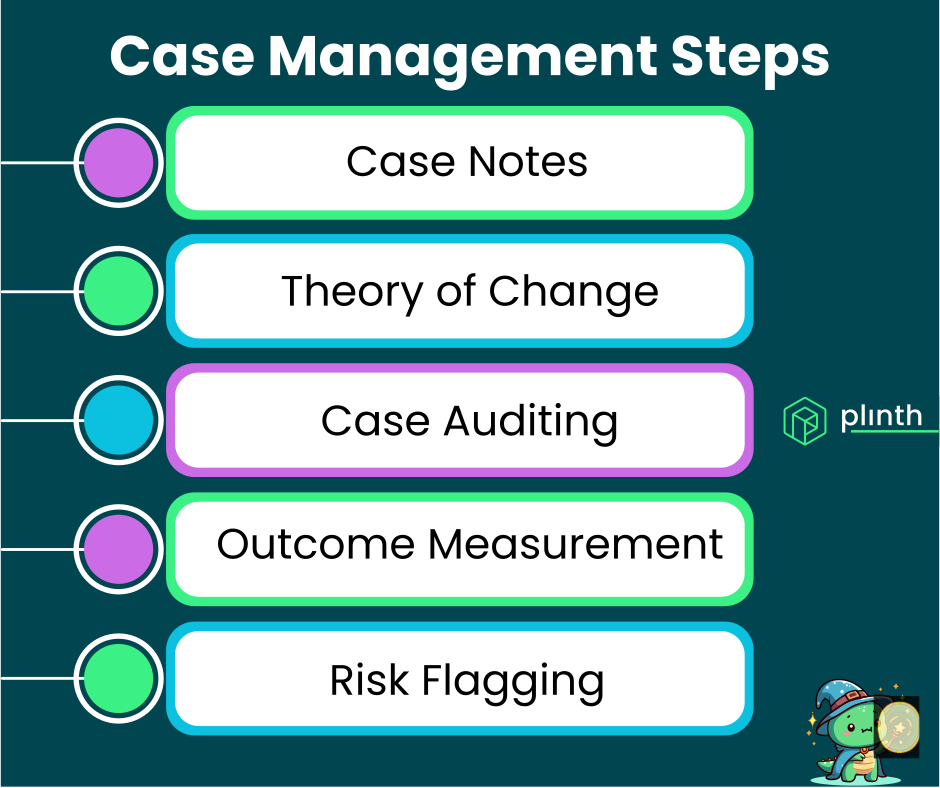
Every time a case worker records a note, updates a concern level, or closes a case with an outcome recorded, they are contributing to something larger than the individual record: a body of evidence about the organisation's impact. The challenge is turning that data into reports that commissioners and funders find credible, useful, and compelling.
Most charities and prevention teams have more data than they think. The problem is usually not a lack of data — it is data that is not structured, not consistent, and not surfaced in the right way at the right time.
What you'll learn: The metrics commissioners and funders most commonly need, how to structure your case management practice to generate them reliably, and how to turn raw case data into reports that make a strong case for continued investment.
The reporting challenge: Organisations often find themselves spending days — sometimes weeks — compiling report data before funding deadlines, pulling information from spreadsheets, case notes, and workers' memories into a coherent picture. A well-configured case management system should make this process take hours, not days, and produce more reliable results.
What Commissioners and Funders Want to See
Understanding what commissioners and funders are actually looking for is the first step to producing useful reports.
The Core Metrics
Volume: How many people did you support? How many cases were opened and closed in the reporting period? What were the demographics of your service users?
Activity: How much support was delivered? Number of contacts, average number of contacts per case, total hours of support delivered.
Reach: Are you reaching the people you were funded to support? This often includes demographic breakdowns, geographic coverage, and evidence of reaching those most in need.
Timeliness: How quickly were people taken on after referral? How long was the average time from case opening to closure? Are cases being reviewed regularly?
Risk Profile: What was the level of need of the people you supported? Concern level data — proportion of cases at low, medium, and high concern — evidences that you are reaching people with genuine need.
Outcome Metrics
Outcomes Achieved: What proportion of service users achieved the defined outcomes? What changed between opening and closing? See Measuring Outcomes in Case Management for a full guide to outcome measurement.
Sustained Change: Where follow-up data is available, did change persist after the service ended?
Comparative Data: How do your outcomes compare to baseline data, to other similar services, or to the population prevalence of the issues you are addressing?
Qualitative Evidence
Case Studies: Anonymised case studies that bring outcomes to life — in the service user's words where possible — are often more persuasive than statistics alone.
Service User Feedback: Structured satisfaction data, quotes, and testimonials demonstrate the service user's experience of change.
Worker Reflection: Brief qualitative accounts from workers about the nature of the work and the challenges overcome provide context for quantitative data.
Structuring Case Management for Reportable Data
Good reports start long before the reporting deadline. They start with good case management practice.
Consistent Opening Records
Every case should have a structured opening record that captures the baseline information needed for outcome comparison.
Presenting Need: What was the service user's situation at the point of referral? Record this in enough detail that a reader in six months' time can understand what you were working with.
Outcome Baselines: If you are measuring outcomes, record baseline scores or status against your outcome domains at case opening. Without a baseline, you cannot demonstrate change.
Referral Source: Where did the referral come from? This data helps funders understand your reach and your place in the local ecosystem.
Demographic Data: With appropriate consent, record the demographic information needed for equalities monitoring and funder reporting.
Consistent Closure Records
Case closure is the most important data collection point for outcome reporting.
Outcome at Exit: Record the service user's situation at exit, directly comparable to the opening record. Did the situation improve, stay the same, or worsen?
Reason for Closure: Was this a planned, positive closure? Disengagement? Transfer? Referral? Each has different implications and needs to be recorded consistently.
Goal Achievement: Did the service user achieve the goals set at the start of support? Record this explicitly.
Cases that are closed without a proper closure record are the most common gap in charity outcome data. Make closure recording a non-negotiable expectation.
Maintaining Data Quality Throughout
Good outcome data requires consistent practice across the team, not just at opening and closure.
Regular Updates: Cases should be updated regularly — both for practice quality and because infrequent records create unreliable data.
Concern Level Consistency: If concern levels are set inconsistently across the team, the aggregate data is meaningless. Calibration in supervision is essential.
Completion Rates: Monitor the proportion of cases that have complete opening records, regular notes, and closure records. Gaps in these areas will undermine your reporting.
Plinth's built-in reporting makes it easy to identify data quality gaps before they become a problem.
Using Plinth for Commissioner and Funder Reporting
Plinth is designed to make reporting to commissioners and funders straightforward.
Built-In Reports
Plinth's standard reports cover the core metrics that commissioners and funders most commonly require:
Caseload Overview: Number of active, paused, and closed cases; breakdown by workflow/pathway; distribution by concern level; distribution by assigned worker.
Activity Reports: Number of contacts recorded in the reporting period; average contacts per case; case duration statistics.
Outcome Data: Outcome status at case closure; baseline vs exit comparisons; outcome achievement rates.
Worker Activity: Case activity by worker, supporting both management oversight and reporting to commissioners who want to know about staff utilisation.
AI-Supported Report Narrative
Raw data tells commissioners what happened. Narrative explains why it matters.
Case Study Generation: Plinth's AI analysis can help generate anonymised case study narratives from case records — turning detailed case histories into compelling stories of change with appropriate consent.
Pattern Summary: AI analysis across the caseload can identify common themes, presenting needs, and outcome patterns that inform the narrative sections of reports.
Impact Language: AI tools can help workers and managers articulate the significance of quantitative data — translating "78% of cases closed with improved housing status" into a narrative that brings that number to life.
Exporting Data for Bespoke Reports
Where commissioners or funders require specific formats or metrics not covered by standard reports, Plinth supports data export for further analysis.
Standard Exports: Data can be exported in standard formats (CSV, Excel) for use in spreadsheets, visualisation tools, or custom reporting templates.
Scheduled Reporting: For regular reporting cycles, Plinth's reporting tools make it straightforward to generate consistent reports on a monthly, quarterly, or annual basis.
Common Reporting Challenges and How to Address Them
The Last-Minute Compilation Problem
Many organisations spend enormous amounts of time compiling report data at the last minute because data is scattered across systems, worker memories, and informal notes.
The Solution: Consistent, structured case management practice means that report data is always ready to pull, not something that needs to be assembled from scratch.
Prevention: Run a report a month before your reporting deadline to identify gaps, then address them before the deadline rather than after.
Incomplete Data
Reports often reveal gaps — missing opening records, unclosed cases, incomplete outcome data.
The Root Cause: Usually inconsistent practice rather than a system failure. Address through supervision, training, and clear expectations.
Monitoring Completion Rates: Regular monitoring of data completion rates — what proportion of cases have complete records — gives early warning of quality issues.
Attribution Challenges
Commissioners increasingly want evidence that your service caused the outcomes, not just that outcomes occurred.
What You Can Demonstrate: Consistent improvement in cases that received your service, compared to a plausible baseline or comparison group.
What to Acknowledge: Be honest about confounding factors. Commissioners trust organisations that acknowledge complexity more than those that overclaim.
Contribution Not Attribution: Frame your evidence as contribution to change — alongside other factors including the service user's own efforts — rather than sole cause.
Sensitive Data in Reports
Some case data is too sensitive to include directly in reports shared with commissioners.
Anonymisation: Case study data should always be anonymised. Go beyond name-removal — consider age, location, and other potentially identifying details.
Aggregation: Aggregate data (numbers and percentages) rather than individual case details for quantitative reporting.
Consent: For case studies shared externally, obtain explicit consent from the service user.
Frequently Asked Questions
How often should we report to commissioners?
This depends on the contract or grant terms, but monthly monitoring data plus quarterly narrative reports is a common arrangement for larger contracts.
Real-Time Access: Some commissioners prefer to have real-time access to management information rather than periodic reports. Discuss with your commissioner whether they would like read-only access to dashboard data.
How do we handle data for multiple funders with different reporting requirements?
Many organisations are funded by multiple sources with different reporting frameworks.
One System, Multiple Views: A well-configured case management system should be able to generate different report cuts for different funders from the same underlying data — without needing separate data collection for each funder.
Consistency Is Key: Consistent recording practices mean that the same data can be used to answer different reporting questions for different funders.
Can Plinth generate reports automatically on a schedule?
Plinth's reporting tools allow reports to be generated on demand and data to be exported for regular reporting cycles. For organisations with specific scheduling requirements, contact our team to discuss what is possible.
Recommended Next Pages
Measuring Outcomes in Case Management – How to design an outcome measurement approach that generates usable data.
AI-Powered Case Analysis and Summaries – How AI helps turn case data into impact narratives.
Case Management Best Practices for Nonprofits – How consistent practice creates reliable data.
Why Plinth Works for Local Authority Teams – How Plinth serves commissioner reporting needs for local authority contracts.
The Complete Guide to Case Management – Comprehensive coverage of case management principles and features.
Last updated: July 2026
To see Plinth's reporting capabilities in action, book a demo or contact our team.