Case Management for Early Prevention Teams
How early prevention and early intervention teams can use case management software to identify need, coordinate support, and evidence impact before situations escalate to crisis.
On this page6
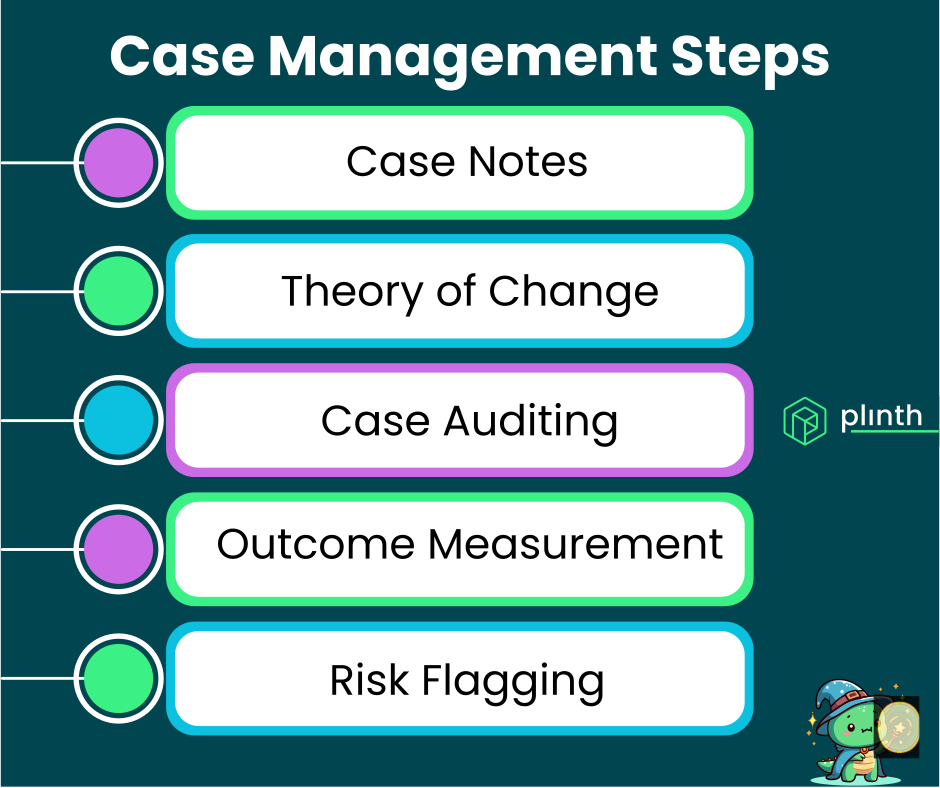
Early prevention teams occupy a distinctive and often underserved space in the support landscape. Their work — reaching people before situations escalate to crisis, building resilience, coordinating wrap-around support — is some of the most valuable work in the sector. It is also some of the hardest to evidence, coordinate, and sustain with the right tools.
What you'll learn: Why early prevention teams have specific case management needs that differ from reactive or statutory services, and how to choose and use tools that genuinely support prevention work.
Who this is for: Team leaders and practitioners in early help, early intervention, family support, community prevention, and neighbourhood-based services — whether delivered by charities, social enterprises, or local authorities.
Why Plinth: Plinth is used by early prevention teams across the UK, including teams working alongside local authority early help services in Camden, Newham, and Kensington and Chelsea. It is built for the kind of light-touch, high-volume, outcomes-focused work that prevention requires.
What Makes Prevention Teams Different
Early prevention teams are not just doing reactive case management at lower levels of need. They are doing qualitatively different work that requires different tools.
Volume and Fluidity
Prevention teams typically work with higher volumes of people than crisis services, but with shorter, lighter engagements. A family support worker might have brief contact with 50 families over a year, some of whom step up to intensive support and most of whom improve and move on.
High Throughput: The system needs to handle high volumes of case openings and closures without becoming administratively burdensome.
Variable Intensity: Some cases will need intensive support; most will not. The system needs to accommodate both without imposing statutory-level administration on light-touch contacts.
Multiple Services: Prevention workers often coordinate across multiple services — schools, health visitors, community groups — and need to record multi-agency involvement clearly.
Outcomes, Not Process
Prevention work lives or dies by its ability to demonstrate that it stopped things getting worse — which is harder to evidence than treating something that went wrong.
Outcome Frameworks: Prevention teams often work to specific outcome frameworks (such as local Early Help Assessment frameworks, which in most local authorities replaced the Common Assessment Framework) and need to record against these consistently.
Strength-Based Recording: Good prevention practice is strength-based, focusing on what families and individuals can do rather than just documenting problems. The best recording systems support this.
Long-Term Tracking: Some prevention impacts only become visible over time. A family that did not become a child protection case is hard to count, but the data to support that narrative needs to be there.
Multi-Agency Coordination
Prevention is rarely delivered by a single organisation. Effective prevention requires coordinated input from health, education, community organisations, and social care.
Shared Record-Keeping: Not every partner will use the same system, but clear records of who is involved and what they are doing reduces the risk of duplication or gaps.
Referral Tracking: Recording where referrals are made and what the outcome of those referrals was is essential for both practice and evidence purposes.
Information Sharing Governance: Multi-agency working requires clear information-sharing agreements, and the case management system needs to support — not undermine — those agreements.
What a Case Management System for Prevention Teams Must Do
Not all case management software is suited to prevention work. Here is what to look for.
Fast, Low-Friction Recording
Prevention workers often see many families briefly. They cannot spend 45 minutes recording each contact.
Mobile-Friendly Interface: Workers in the community need to record on the go, not wait until they return to the office.
Flexible Note Types: Recording should support brief check-ins as well as detailed assessments, without forcing all contacts into the same template.
Minimal Mandatory Fields: Over-specified forms discourage recording. The minimum required fields should reflect what is genuinely needed, with richer recording available when appropriate.
Plinth's interaction tracking is designed to be fast and flexible — recording a brief contact takes seconds, but full detail is available when needed.
Configurable Workflows for Prevention Pathways
Prevention work does not follow a single pathway. Different service offers require different workflows.
Multiple Pathway Support: A team running family support, benefits advice, and community development programmes simultaneously needs different workflows for each, with clear visual distinction.
Step-Down and Step-Up Logic: Prevention teams need to move cases smoothly between levels of support as circumstances change — stepping up to intensive support when needed, stepping down when improvement is achieved.
Milestone Tracking: Some prevention programmes include defined milestones or staged outcomes. The system should be able to record progress against these.
Setting up case workflows and pathways in Plinth takes minutes and can be reconfigured as service designs evolve.
Early Warning and Risk Identification
Prevention only works if deterioration is caught before it reaches crisis. The system needs to help teams see when a case that appeared stable is actually getting worse.
Concern Level Visibility: The three-tier concern level system — Low, Medium, High — is essential for prioritising prevention caseloads that span a wide range of need.
Inactivity Flags: Cases that have not had recent contact should be visible to managers, not buried in an undifferentiated list.
AI Risk Analysis: Plinth's AI analysis can review case notes and surface language patterns associated with deteriorating situations — catching the signals that a busy worker might miss.
See Spotting Risks Before They Happen for a detailed guide to early risk detection.
Outcome Recording That Supports Funder Reporting
Prevention funding is often outcome-based. Teams need to record outcomes in a way that directly supports the reporting their funders require.
Structured Outcomes: The ability to record outcomes against defined frameworks — families achieving stable housing, children maintaining school attendance, individuals entering employment — is essential.
Case Closure Documentation: Outcome recording at case closure, including whether goals were achieved and what the family or individual's situation was at the point of exit, provides the core data for impact reporting.
Aggregate Reporting: Funders need to see aggregate data — how many families supported, what proportion achieved positive outcomes, what the evidence of impact is.
Plinth's built-in reporting and outcome tracking makes this straightforward rather than requiring manual compilation.
Setting Up Plinth for a Prevention Team
Plinth can be configured to reflect the specific service offer, outcome framework, and reporting requirements of any prevention team.
Starting Small: The Pilot Approach
Many prevention teams start with a small pilot — one team, one service area, or one borough — before rolling out more widely.
Why Pilot: A pilot allows the team to test whether the system fits their practice, refine their workflows, and build internal champions before wider adoption.
What to Pilot: Typically 3–6 months of operation with a subset of the team, covering the core use cases: recording contacts, managing caseloads, supervision support, and basic reporting.
Evaluation Criteria: At the end of the pilot, assess worker satisfaction, quality of recorded data, ease of supervision, and whether the system has made it easier or harder to do the work.
Plinth actively supports organisations through this pilot phase — we want teams to be confident in the decision before committing to full rollout.
Configuring Workflows for Your Services
Before going live, invest time in designing your workflows to reflect your actual service delivery.
Map Your Pathways: List the distinct types of support you offer and the stages each case moves through. These become your Plinth workflows.
Name Them Clearly: Workers and managers will see pathway names throughout the system. Use names that reflect your practice, not generic terms.
Agree Concern Level Criteria: Establish team-wide definitions of what constitutes low, medium, and high concern for your service user group. This calibration is more important than any specific field in the system.
Training and Adoption
The best case management system will fail if workers do not use it.
Hands-On Training: Workers learn by doing, not by watching. Training should involve real case scenarios and real data entry, not just demonstrations.
Early Wins: Identify two or three features that make workers' lives easier right away — such as quick recording on mobile or AI summaries for supervision — and make sure these are demonstrated in training.
Ongoing Support: Plinth provides ongoing support for teams as they embed the system, including guidance on getting the most from AI features and reporting tools.
Evidencing Prevention Impact
One of the most persistent challenges for prevention teams is demonstrating the value of work that prevented something from happening.
What Good Evidence Looks Like
Baseline and Progress: Recording the situation at case opening and at regular intervals provides evidence of change. A family whose circumstances improved measurably during support is a fundable story, even if they never reached crisis.
Comparative Data: Where possible, build a picture of what the trajectory was before intervention and what it became with support. This is the core of prevention evidence.
Service User Voice: Capturing the experience of families and individuals in their own words — through structured feedback or recorded conversation — adds powerful qualitative evidence alongside quantitative data.
Using AI for Impact Narratives
Plinth's AI analysis can help teams construct impact narratives more efficiently.
Case-Level Stories: AI summaries of individual cases can be used to generate case studies for funding applications, with anonymisation applied appropriately.
Pattern Identification: AI analysis across the caseload can identify common themes, presenting needs, and outcomes — supporting service-level impact reports.
Prevention impact is real but hard to see. Good recording and AI-assisted analysis make it visible.
Frequently Asked Questions
How is early prevention case management different from statutory social care?
Prevention case management is typically lighter-touch, higher-volume, and strength-based. It focuses on building resilience and addressing need before it escalates, rather than managing formal statutory responsibilities.
Less Process, More Relationship: Prevention recording should capture the relational, strength-based nature of the work, not impose a bureaucratic framework that doesn't fit.
Different Risk Thresholds: The risk indicators relevant to prevention work differ from statutory thresholds. The system should support workers in thinking about escalation within the prevention space, not just in terms of statutory referral.
Can Plinth integrate with local authority systems?
Plinth is designed primarily as a standalone case management platform for voluntary sector and prevention teams. It is not designed to replace or directly integrate with statutory social care platforms, but it can operate alongside them.
Referral Recording: Workers can record referrals to and from statutory services as part of the case history, maintaining a clear picture of multi-agency involvement.
Export for Information Sharing: Data can be exported in standard formats where formal information sharing with statutory partners is required.
What outcome frameworks can we use with Plinth?
Plinth's workflow and note-taking structure is flexible enough to support any outcome framework.
Common Frameworks: Teams working to frameworks like Outcomes Star or local authority Early Help Assessment frameworks (which in most areas superseded the Common Assessment Framework) can record against these within Plinth's case notes and structured fields.
Bespoke Frameworks: If your funder or commissioner uses a bespoke outcomes framework, this can be incorporated into your workflow and recording structure.
Recommended Next Pages
Spotting Risks Before They Happen – Early warning indicators and how to surface them systematically.
Why Plinth Works for Local Authority Teams – How Plinth supports local authority prevention services, including real-world experience with Camden, Newham, and Kensington and Chelsea.
Best Case Management Systems for UK Charities – How to evaluate and choose the right system for your organisation.
Measuring Outcomes in Case Management – How to record and report outcomes in a way that supports funder reporting.
The Complete Guide to Case Management – Comprehensive coverage of case management principles and features.
Last updated: February 2026
To explore how Plinth supports early prevention teams, book a demo or contact our team.